
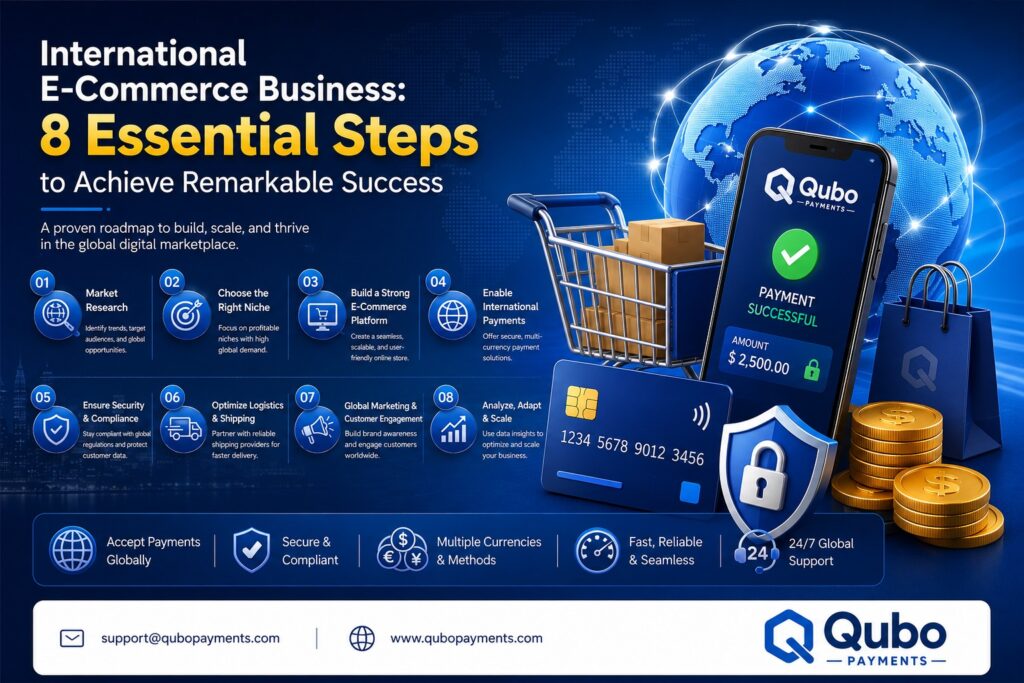
International e-commerce business are companies that sell products or services across national borders using digital platforms. They enable consumers and businesses in different countries to buy and sell online, often handling payments, logistics, customs, taxation, and localization.
International e-commerce businesse are companies that sell products or services online to customers in more than one country. Instead of operating only in their home market, they use websites, online marketplaces, apps, and digital payment systems to reach customers worldwide.
What Is International E-Commerce business?
International e-commerce business refers to online commercial transactions between buyers and sellers located in different countries. It includes:
- Business-to-Consumer (B2C): Companies selling directly to international customers.
- Business-to-Business (B2B): Companies selling products or services to businesses abroad.
- Consumer-to-Consumer (C2C): Individuals trading through online marketplaces.
Direct-to-Consumer (D2C): Manufacturers selling directly to overseas consumers.
Major Types of International E-Commerce Business

1. Global Online Marketplaces
These platforms connect buyers and sellers worldwide.
Examples:
- Amazon
- Alibaba Group
- eBay
- Etsy
- Rakuten
Characteristics:
- Large customer base
- Built-in payment systems
- International shipping support
- Seller tools and analytics
2. Direct-to-Consumer (D2C) Global Brands
Companies sell through their own websites rather than third-party marketplaces.
Examples:
- Nike
- Apple
- Zara
- Tesla
Advantages:
- Higher profit margins
- Stronger brand control
- Direct customer relationships
- Better customer data collection
3. B2B International E-Commerce Platforms
Businesses sell products or services to other businesses globally.
Examples:
- Alibaba.com
- IndiaMART
- Global Sources
- Thomasnet
Common Products:
- Industrial equipment
- Raw materials
- Components
- Wholesale consumer goods
Key Components of International E-Commerce business

International e-commerce involves selling goods or services online across national borders. To operate successfully, businesses need several essential components that enable transactions, delivery, compliance, and customer satisfaction.
1. E-Commerce Website or Online Store
The website serves as the digital storefront where customers browse products and make purchases.
Features:
- User-friendly design
- Mobile compatibility
- Product catalogs
- Shopping cart functionality
- Secure checkout process
- Multi-language support
Importance: A well-designed website improves customer experience and increases sales conversions.
2. Product Management
Businesses must effectively manage product information for different international markets.
Includes:
- Product descriptions
- Images and videos
- Pricing
- Inventory tracking
- Product categorization
Importance: Accurate product information reduces customer confusion and returns.
3. Payment Processing Systems
Customers from different countries prefer different payment methods.
Common payment options:
- Credit and debit cards
- Digital wallets
- Bank transfers
- Buy Now, Pay Later (BNPL)
Requirements:
- Multi-currency support
- Secure payment gateways
- Fraud detection systems
Importance: Convenient and secure payment options improve customer trust.
4. Currency Management
International customers expect prices in their local currency.
Functions:
- Currency conversion
- Exchange rate updates
- Local pricing strategies
Importance: Transparent pricing reduces purchase hesitation.
5. International Logistics and Shipping
Products must be delivered efficiently across borders.
Components:
- Warehousing
- Packaging
- Shipping carriers
- Tracking systems
- Delivery management
Importance: Fast and reliable shipping enhances customer satisfaction.
6. Customs and Trade Compliance
Every country has its own import and export regulations.
Requirements:
- Customs declarations
- Import/export licenses (where applicable)
- Product certifications
- Tariff and duty calculations
Importance: Compliance prevents delays, penalties, and shipment rejections.
7. Tax Management
Businesses must handle international tax obligations correctly.
Examples:
- VAT (Value Added Tax)
- GST (Goods and Services Tax)
- Sales tax
- Import duties
Importance: Proper tax management ensures legal compliance and accurate pricing.
8. Inventory and Order Management
Businesses need systems to track products and fulfill orders efficiently.
Functions:
- Stock monitoring
- Order processing
- Warehouse coordination
- Reorder management
Importance: Prevents stockouts and overselling.
9. Customer Service and Support
International customers require assistance before and after purchases.
Support channels:
- Live chat
- Phone support
- Social media
Services provided:
- Order tracking
- Product inquiries
- Complaint resolution
- Return assistance
Importance: Strong customer support builds loyalty and repeat business.
10. Marketing and Localization
Marketing strategies should be adapted to each target country.
Localization includes:
- Language translation
- Cultural adaptation
- Local promotions
- Region-specific content
Digital marketing channels:
- Search engine optimization (SEO)
- Social media marketing
- Email marketing
- Online advertising
Importance: Localization increases customer engagement and trust.
11. Cybersecurity and Data Protection
International e-commerce business handle sensitive customer information.
Security measures:
- SSL encryption
- Secure payment systems
- Data backup
- Fraud prevention tools
- Access controls
Importance: Protects customer data and business reputation.
12. Technology Infrastructure
Technology supports all e-commerce operations.
Includes:
- E-commerce platforms
- Cloud services
- Databases
- Analytics tools
- Customer Relationship Management (CRM) systems
Importance: Ensures smooth and scalable business operations.
13. Returns and Reverse Logistics
Customers expect easy return and refund processes.
Activities:
- Return authorization
- Product inspection
- Refund processing
- Restocking
Importance: A simple return policy increases customer confidence.
14. Analytics and Performance Monitoring
Businesses use data to improve decision-making.
Key metrics:
- Website traffic
- Conversion rates
- Average order value
- Customer acquisition cost
- Customer lifetime value
Importance: Helps identify opportunities for growth and operational improvements.
Summary Diagram
International E-Commerce│├── Online Store / Website├── Product Management├── Payment Systems├── Currency Management├── Logistics & Shipping├── Customs & Compliance├── Tax Management├── Inventory & Orders├── Customer Service├── Marketing & Localization├── Cybersecurity├── Technology Infrastructure├── Returns Management└── Analytics & ReportingThese components work together to create a seamless international shopping experience, enabling businesses to serve customers across multiple countries efficiently and profitably.
Examples of International E-Commerce Business

International e-commerce business operate across multiple countries, selling products or services online to customers worldwide. Below are some prominent examples categorized by business model.
1. Global Online Marketplaces
These platforms connect millions of buyers and sellers from different countries.
Amazon
Amazon Official Website
- Operates in numerous countries across North America, Europe, Asia, and the Middle East.
- Sells electronics, clothing, books, groceries, and more.
- Offers international shipping and fulfillment services.
eBay
eBay Official Website
- Enables individuals and businesses to sell internationally.
- Supports auctions and fixed-price sales.
- Available in many countries worldwide.
Alibaba Group
Alibaba Official Website
- One of the world’s largest B2B marketplaces.
- Connects manufacturers, wholesalers, and retailers globally.
- Strong presence in international trade.
2. Direct-to-Consumer (D2C) Global Brands
These companies sell directly to consumers through their own websites.
Nike
Nike Official Website
- Sells footwear, apparel, and sports equipment worldwide.
- Localized websites for multiple countries.
- Supports international payment and shipping options.
Apple
Apple Official Website
- Sells iPhones, iPads, Macs, and accessories globally.
- Operates localized online stores in many countries.
- Provides region-specific pricing and support.
Zara
Zara Official Website
- Offers fashion products worldwide through online channels.
- Uses integrated inventory and logistics systems.
- Provides localized shopping experiences.
3. International E-Commerce Business B2B
These companies facilitate transactions between businesses.
IndiaMART
IndiaMART Official Website
- Connects Indian suppliers with domestic and international buyers.
- Focuses on industrial and commercial products.
Global Sources
Global Sources Official Website
- Links global buyers with verified suppliers.
- Popular for electronics and manufacturing sourcing.
4. Handmade and Niche Product Platforms
Etsy
Etsy Official Website
- Specializes in handmade, vintage, and customized products.
- Sellers ship products to customers worldwide.
- Supports small businesses and independent creators.
5. International E-Commerce business from Asia
Rakuten
Rakuten Official Website
- Operates online marketplaces and digital services.
- Serves customers in multiple countries.
JD.com
JD.com Official Website
- Major online retailer with advanced logistics capabilities.
- Expanding international operations and partnerships.
6. Cross-Border Fashion and Lifestyle Businesses
ASOS
ASOS Official Website
- Serves customers in more than 190 countries.
- Offers localized payment and delivery options.
SHEIN
SHEIN Official Website
- Focuses on fast fashion and global online sales.
- Uses digital marketing and data-driven merchandising.
Common Features of Successful International E-Commerce Business
- Multi-currency payment systems
- International shipping and logistics networks
- Localized websites and languages
- Strong cybersecurity measures
- Efficient customer support
- Compliance with international regulations
- Data analytics and personalization
Comparison Table
| Company | Business Model | Main Products/Services | Global Reach |
| Amazon | B2C Marketplace | General merchandise | Worldwide |
| Alibaba | B2B Marketplace | Wholesale products | Worldwide |
| eBay | C2C/B2C Marketplace | Various products | Worldwide |
| Nike | D2C | Sportswear | Worldwide |
| Apple | D2C | Electronics | Worldwide |
| Etsy | Marketplace | Handmade goods | Worldwide |
| IndiaMART | B2B Marketplace | Industrial products | Global buyers |
| ASOS | D2C | Fashion | International |
| Rakuten | Marketplace | Retail products | International |
| JD.com | B2C | Retail products | Expanding globally |
These companies demonstrate different approaches to international e-commerce, from global marketplaces and wholesale platforms to direct-to-consumer brands and niche online retailers.
Key Characteristics of International E-Commerce Business
International e-commerce business have distinctive features that enable them to operate across multiple countries and serve customers worldwide. These characteristics differentiate them from domestic e-commerce businesses.
1. Global Market Reach
International e-commerce businesses sell products or services to customers in different countries and regions.
Characteristics:
- Access to worldwide customers
- Expanded sales opportunities
- Ability to enter new markets without physical stores
Example: Amazon serves customers across many countries through localized websites.
2. Cross-Border Transactions
These businesses conduct transactions between buyers and sellers located in different countries.
Characteristics:
- International payments
- Foreign currency transactions
- Cross-border shipping
Benefit: Increases customer base beyond national boundaries.
3. Multi-Currency Support
International E-commerce business allow customers to view prices and pay in their local currencies.
Features:
- Currency conversion
- Dynamic exchange rates
- Localized pricing
Importance: Improves customer convenience and purchasing confidence.
4. Multi-Language Capability
To serve customers from different countries, businesses provide content in multiple languages.
Includes:
- Website translation
- Product descriptions
- Customer support communication
Benefit: Enhances customer experience and accessibility.
5. International Logistics and Distribution
Efficient logistics systems are essential for delivering products globally.
Characteristics:
- Global warehouses
- International shipping partnerships
- Real-time shipment tracking
- Return management systems
Importance: Ensures timely and reliable delivery.
6. Localization of Products and Marketing
Businesses adapt products, advertisements, and websites to local cultures and preferences.
Examples:
- Country-specific promotions
- Cultural adaptations
- Local payment preferences
Benefit: Increases customer engagement and trust.
7. Diverse Payment Methods
Customers in different countries prefer different payment options.
Common methods:
- Credit/debit cards
- Digital wallets
- Bank transfers
- Mobile payments
Importance: Reduces barriers to purchase.
8. Compliance with International Laws and Regulations
International e-commerce business must follow regulations in multiple countries.
Areas of compliance:
- Consumer protection laws
- Data privacy regulations
- Import/export rules
- Tax requirements
Benefit: Avoids legal issues and penalties.
9. Advanced Technology Infrastructure
International operations require robust digital systems.
Components:
- E-commerce platforms
- Cloud computing
- Inventory management software
- Customer Relationship Management (CRM)
- Data analytics tools
Importance: Supports scalability and efficiency.
10. Strong Cybersecurity Measures
Protecting customer and business data is critical.
Security practices:
- Data encryption
- Secure payment gateways
- Fraud detection systems
- Authentication controls
Benefit: Builds customer trust and protects business assets.
11. Customer-Centric Approach
Successful international businesses focus on customer satisfaction.
Features:
- 24/7 customer support
- Easy returns and refunds
- Personalized recommendations
- Fast response times
Importance: Encourages repeat purchases and loyalty.
12. Scalability
International e-commerce businesses are designed to grow across multiple markets.
Characteristics:
- Flexible operations
- Automated systems
- Ability to handle increasing orders
Benefit: Supports long-term business expansion.
13. Data-Driven Decision Making
These businesses use data to optimize operations and marketing.
Data analyzed:
- Customer behavior
- Sales trends
- Website traffic
- Market demand
Benefit: Improves strategic planning and profitability.
14. Competitive Pricing Strategy
International businesses often compete with sellers from many countries.
Strategies:
- Dynamic pricing
- Promotional discounts
- Regional pricing adjustments
Importance: Helps attract and retain customers.
Summary Table
| Characteristic | Description |
| Global Reach | Serves customers worldwide |
| Cross-Border Transactions | International buying and selling |
| Multi-Currency Support | Local currency payments |
| Multi-Language Capability | Content in different languages |
| Global Logistics | International shipping and delivery |
| Localization | Adaptation to local markets |
| Multiple Payment Options | Diverse payment methods |
| Legal Compliance | Adherence to international regulations |
| Technology Infrastructure | Advanced digital systems |
| Cybersecurity | Protection of data and transactions |
| Customer Focus | Quality service and support |
| Scalability | Capacity for global growth |
| Data Analytics | Data-driven decisions |
| Competitive Pricing | Market-responsive pricing |
Conclusion
The key characteristics of an international e-commerce business are global reach, cross-border operations, localization, multiple payment and currency options, strong logistics networks, regulatory compliance, advanced technology, cybersecurity, and customer-centric service. Together, these characteristics enable businesses to successfully compete and grow in the global online marketplace.
Types of International E-Commerce business
- B2C (Business-to-Consumer): Companies sell directly to consumers in other countries.
- B2B (Business-to-Business): Companies sell products or services to businesses abroad.
- C2C (Consumer-to-Consumer): Individuals sell to other individuals through online platforms.
- D2C (Direct-to-Consumer): Manufacturers or brands sell directly to customers worldwide.
Advantages
- Access to larger global markets.
- Increased sales opportunities.
- Ability to operate 24/7.
- Lower costs compared with establishing physical stores in multiple countries.
Challenges
- Shipping and logistics complexities.
- Customs duties and taxes.
- Currency exchange fluctuations.
- Language and cultural differences.
- Different legal and regulatory requirements.
Example: An Indian clothing brand that sells through its website to customers in the United States, United Kingdom, and Australia is operating as n international e-commerce business because it conducts online sales across national borders
International (or cross-border) e-commerce refers to online commercial transactions between buyers and sellers located in different countries. It includes:
- Business-to-Consumer (B2C): Companies selling directly to international customers.
- Business-to-Business (B2B): Companies selling products or services to businesses abroad.
- Consumer-to-Consumer (C2C): Individuals trading through online marketplaces.
- Direct-to-Consumer (D2C): Manufacturers selling directly to overseas consumers.
Business Models in International E-Commerce Business
| Model | Description | Example |
| B2C | Business sells to consumers | Amazon |
| B2B | Business sells to businesses | Alibaba |
| C2C | Consumers sell to consumers | eBay |
| D2C | Manufacturer sells directly | Nike |
| Dropshipping | Seller markets products without holding inventory | Shopify-based stores |
| Subscription | Recurring deliveries or services | Streaming and subscription boxes |
Advantages of International E-Commerce Business
1. Access to Global Markets
Businesses can reach customers in dozens of countries without opening physical stores.
2. Increased Revenue Potential
More customers generally mean greater sales opportunities.
3. Lower Expansion Costs
Digital expansion is often cheaper than establishing overseas branches.
4. 24/7 Operations
Online stores operate continuously across time zones.
5. Data-Driven Decisions
Companies can track:
- Customer behavior
- Sales trends
- Conversion rates
- Regional demand
Challenges of International E-Commerce Business
Language and Cultural Differences
Marketing messages may need adaptation for local cultures.
Regulatory Compliance
Different countries have different:
- Consumer protection laws
- Privacy regulations
- Product standards
Logistics Complexity
International shipping can involve:
- Delays
- Customs inspections
- High transportation costs
Currency Fluctuations
Exchange rate changes can affect profitability.
Cybersecurity Risks
Businesses must protect:
- Customer information
- Payment data
- Intellectual property
Technologies Supporting International E-Commerce
E-Commerce Platforms
- Shopify
- BigCommerce
- WooCommerce
- Adobe Commerce (Magento)
Emerging Technologies
- Artificial Intelligence
- Machine Learning
- Chatbots
- Blockchain
- Predictive Analytics
- Augmented Reality (AR)
Global E-Commerce Trends
Cross-Border Shopping Growth
Consumers increasingly purchase products from foreign sellers.
Mobile Commerce (M-Commerce)
A large share of online purchases now occur via smartphones.
Social Commerce
Sales through social media platforms are growing rapidly.
AI-Powered Personalization
Businesses use AI to recommend products and improve customer experiences.
Sustainable Commerce
Customers increasingly consider environmental impact when purchasing.
Example: How an International E-Commerce Business Operates
Imagine a clothing company in India:
- Products are listed online.
- Customers from the USA, UK, and Australia place orders.
- Payments are processed in local currencies.
- Orders are packed in a fulfillment center.
- International couriers deliver products.
- Customs duties and taxes are handled.
- Customer support manages returns and inquiries.
This entire process occurs digitally while serving customers across multiple countries.
Future Outlook
International e-commerce is expected to continue expanding due to:
- Greater internet penetration
- Improved digital payments
- Faster global logistics networks
- Growth of mobile shopping
- AI-driven automation and personalization
For businesses in countries such as India, international e-commerce offers significant opportunities to access global consumers without the large investment traditionally required for international expansion.
Conclusion
International e-commerce businesses have transformed the way companies reach customers, enabling them to expand beyond domestic markets and compete on a global scale. By leveraging digital platforms, secure payment solutions, efficient logistics networks, and localized customer experiences, businesses can unlock significant growth opportunities in international markets.
However, success in cross-border e-commerce depends on effectively managing key challenges such as currency conversion, payment security, regulatory compliance, taxation, and international shipping. Businesses need reliable technology and payment infrastructure to provide seamless transactions and build customer trust across different countries.
For businesses looking to grow globally, Qubo Payments can play a vital role by offering secure, efficient, and scalable payment solutions that simplify cross-border transactions. With streamlined payment processing, multi-currency support, and enhanced security features, Qubo Payments helps international e-commerce businesses deliver a smooth customer experience while expanding their global reach.
As global online shopping continues to grow, businesses that invest in robust e-commerce strategies and trusted payment solutions like Qubo Payments will be better positioned to achieve sustainable international success and long-term competitiveness in the digital marketplace.