
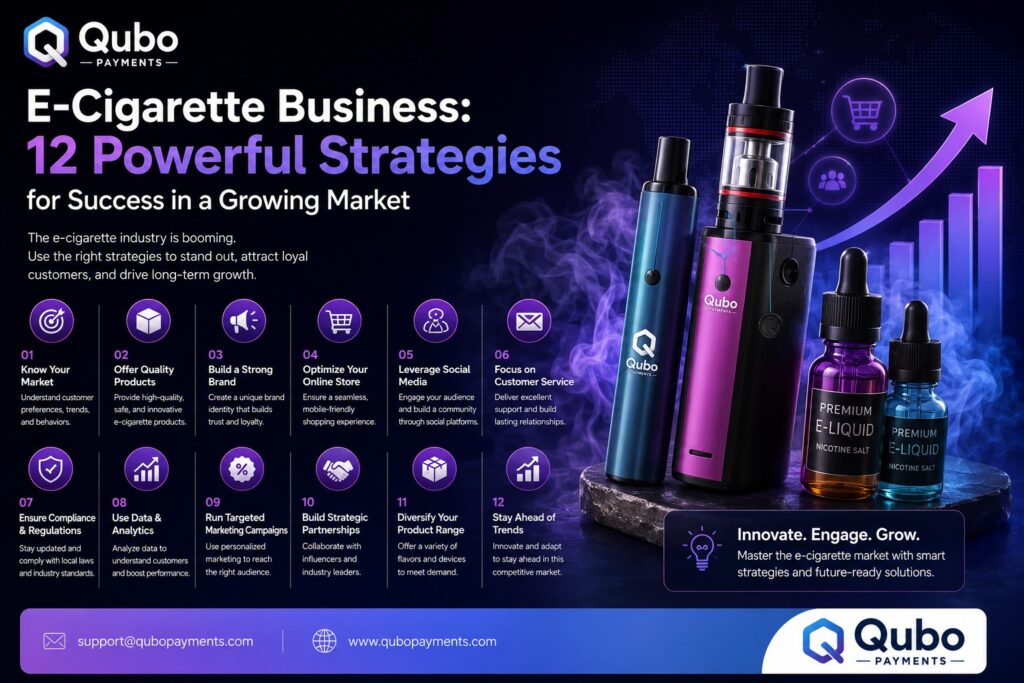
The e-cigarette business is a segment of the vaping industry that involves the manufacture, distribution, marketing, and sale of electronic cigarettes and related products. Over the past decade, the industry has experienced significant growth due to consumer interest in alternatives to traditional tobacco products, technological innovation, and expanding product variety.
However, the industry is also highly regulated in many countries, with rules that can vary significantly by location. Businesses operating in this sector must understand and comply with all applicable laws, regulations, age restrictions, marketing requirements, and product standards.
What Is an E-Cigarette Business?

An e-cigarette business is a company that manufactures, distributes, wholesales, retails, or markets electronic cigarettes (e-cigarettes), vaping devices, and related products. These businesses operate within the vaping industry and serve adult consumers in markets where such products are legal. E-cigarettes are electronic devices that heat a liquid solution (often called e-liquid or vape liquid) to create an aerosol that users inhale. Businesses in this sector may focus on product development, sales, distribution, or customer support.
Types of E-Cigarette Businesses
1. Retail Vape Shops
Physical stores that sell vaping products directly to consumers.
Advantages:
- Personalized customer service
- Product demonstrations
- Local market presence
2. Online Vape Stores
E-commerce businesses that sell products through websites in jurisdictions where online sales are legal.
Advantages:
- Wider customer reach
- Lower operating costs
- 24/7 sales capability
3. Wholesale Distribution
Businesses supply products to retailers and vape shops.
Advantages:
- Larger order volumes
- Long-term business relationships
- Consistent revenue opportunities
4. Manufacturing Businesses
Companies design and produce e-cigarette devices and related products.
Advantages:
- Brand ownership
- Higher margins
- Product innovation opportunities
An e-cigarette business is an organization involved in the production, distribution, or sale of electronic cigarettes and vaping-related products. These businesses can operate through retail stores, online platforms, wholesale networks, or manufacturing facilities. Success in the industry depends on product quality, operational efficiency, customer service, and adherence to all applicable regulations and legal requirements.
Key Components of an E-Cigarette Business
Product Selection
A successful business typically offers a variety of products to meet different customer preferences.
Supply Chain Management
Businesses need reliable suppliers, inventory systems, and logistics networks.
Compliance Management
Regulatory compliance is one of the most important aspects of operating in this industry.
Customer Service
Providing accurate product information and support helps build customer trust.
Marketing Strategy
Marketing activities must comply with local advertising and age-restriction laws.
Target Market in the E-Cigarette Business
The target market in the e-cigarette business consists of specific groups of adult consumers who are legally permitted to purchase vaping products in their jurisdiction. Businesses must comply with all applicable age restrictions, marketing regulations, and consumer protection laws.
1. Adult Smokers Seeking Alternatives
One of the primary customer segments includes adult smokers who are interested in alternatives to traditional tobacco products.
Characteristics:
- Adults of legal purchasing age
- Existing tobacco users
- Interested in alternative nicotine delivery products
Business Opportunities:
- Starter device offerings
- Educational product information
- Customer support and guidance
2. Experienced Vaping Users
These customers are already familiar with vaping products and often seek advanced devices and accessories.
Characteristics:
- Knowledge of vaping technology
- Interest in device customization
- Frequent purchasers of accessories and replacement components
Business Opportunities:
- Premium devices
- Advanced pod systems
- Replacement parts and accessories
3. Technology-Oriented Consumers
Some adult consumers are attracted to vaping devices because of their technological features.
Characteristics:
- Interest in innovation
- Preference for modern device designs
- Focus on performance and convenience
Business Opportunities:
- Smart vaping devices
- Rechargeable systems
- Advanced battery technologies
4. Convenience-Focused Consumers
Many customers value products that are easy to use and maintain.
Characteristics:
- Preference for simple products
- Interest in portable devices
- Limited technical knowledge
Business Opportunities:
- User-friendly devices
- Compact products
- Easy maintenance solutions
5. Premium Product Buyers
This segment seeks high-quality products and premium experiences.
Characteristics:
- Willingness to pay higher prices
- Preference for established brands
- Focus on quality and reliability
Business Opportunities:
- Premium devices
- Luxury packaging
- Enhanced customer service
6. Online Shoppers
Many adult consumers prefer purchasing products through authorized online channels where permitted by law.
Characteristics:
- Comfortable with digital purchasing
- Value convenience and product variety
- Often compare products before buying
Business Opportunities:
- E-commerce platforms
- Online customer support
- Digital marketing strategies compliant with regulations
Geographic Target Markets
E-cigarette businesses may target:
- Urban areas with higher consumer demand
- Regions where vaping products are legally sold
- Markets with established distribution networks
- Countries with supportive regulatory frameworks
Businesses should always research local laws before entering new markets.
Key Factors Influencing Target Markets
Age
Only adults who meet the legal age requirements should be targeted.
Income Level
Different product categories appeal to different income groups.
Lifestyle Preferences
Consumer interests and purchasing behaviors influence product choices.
Product Knowledge
Businesses often serve both beginners and experienced users with different product offerings.
Conclusion
The target market for an e-cigarette business primarily consists of adults of legal purchasing age, including adult smokers, experienced vaping users, technology-oriented consumers, convenience-focused buyers, premium product customers, and online shoppers. Successful businesses tailor their products, services, and customer experiences to these segments while ensuring full compliance with all applicable laws, age restrictions, and marketing regulations.
Benefits of Operating an E-Cigarette Business

The e-cigarette business has become a significant segment of the global vaping industry, creating opportunities for entrepreneurs, retailers, wholesalers, and manufacturers. While the industry is subject to strict regulations and varying legal requirements across jurisdictions, businesses operating legally in this sector may benefit from several commercial advantages.
1. Growing Consumer Demand
In many markets, adult consumers have shown interest in e-cigarettes and vaping products, contributing to industry growth.
Benefits:
- Expanding customer base
- Increased sales opportunities
- Potential for long-term market participation
2. Diverse Product Portfolio
E-cigarette businesses can offer a wide range of products and accessories.
Product Categories:
- Disposable devices
- Rechargeable devices
- Pod systems
- Replacement coils
- Batteries and chargers
- Accessories
Benefits:
- Multiple revenue streams
- Broader customer appeal
- Opportunities for product diversification
3. Recurring Customer Purchases
Many vaping products require replacement parts or ongoing purchases of compatible consumables and accessories.
Benefits:
- Repeat business opportunities
- Customer retention potential
- More predictable revenue patterns
4. E-Commerce Opportunities
Where legally permitted, businesses can sell products through online platforms.
Benefits:
- Wider geographic reach
- Lower operating costs than physical stores
- 24/7 sales capability
- Improved customer convenience
5. Brand Development Potential
Businesses can create unique brands and product offerings to differentiate themselves from competitors.
Benefits:
- Increased brand recognition
- Customer loyalty
- Competitive market positioning
6. Wholesale and Distribution Opportunities
Businesses can operate as wholesalers supplying retailers and vape shops.
Benefits:
- Larger order volumes
- Long-term business relationships
- Expanded market coverage
7. Technology-Driven Industry
The vaping sector often incorporates new technologies and product innovations.
Benefits:
- Product development opportunities
- Market differentiation
- Enhanced customer experiences
8. International Expansion Possibilities
Subject to local regulations, businesses may explore opportunities in multiple markets.
Benefits:
- Access to broader customer bases
- Revenue diversification
- Increased growth potential
9. Customer Loyalty Programs
Businesses can build relationships through customer service and loyalty initiatives where permitted by law.
Benefits:
- Increased repeat purchases
- Improved customer retention
- Enhanced brand value
10. Scalability
E-cigarette businesses can often expand from small operations into larger enterprises.
Growth Options:
- Opening additional retail locations
- Expanding online sales
- Entering wholesale distribution
- Developing private-label products
Benefits:
- Revenue growth potential
- Increased market presence
- Long-term business development
11. Private Label Opportunities
Businesses may develop products under their own brand names through authorized manufacturing arrangements.
Benefits:
- Greater brand control
- Higher profit margins
- Stronger customer recognition
12. Digital Marketing and Analytics
Where legally permitted, businesses can use digital tools to better understand customer behavior.
Benefits:
- Improved marketing effectiveness
- Better inventory planning
- Data-driven decision-making
Conclusion
Operating an e-cigarette business can offer benefits such as growing consumer demand, recurring sales opportunities, product diversification, e-commerce growth, brand development, scalability, and wholesale expansion potential. However, success depends on maintaining strong operational practices, delivering quality products and customer service, and complying with all applicable laws, regulations, age-verification requirements, and industry standards.
Challenges in the E-Cigarette Industry
The e-cigarette industry has experienced rapid growth, but businesses operating in this sector face several significant challenges. These challenges can affect profitability, operations, compliance, customer trust, and long-term sustainability. Understanding these issues is essential for entrepreneurs, retailers, wholesalers, and manufacturers in the vaping industry.
1. Regulatory Compliance
One of the biggest challenges in the e-cigarette industry is navigating complex and constantly changing regulations.
Key Regulatory Issues
- Minimum age restrictions
- Product registration requirements
- Labeling and packaging rules
- Advertising limitations
- Flavor restrictions in some regions
- Taxation and licensing requirements
- Import and export regulations
Impact on Businesses
- Increased compliance costs
- Need for legal and regulatory expertise
- Risk of penalties or business interruptions for non-compliance
- Frequent updates to business operations and product offerings
Businesses must closely monitor local, national, and international laws to operate legally.
2. Market Competition
The vaping industry is highly competitive, with many brands and retailers competing for market share.
Competitive Challenges
- Price competition
- Brand differentiation
- Customer acquisition costs
- Rapid product innovation cycles
- Competition from established tobacco companies and new startups
Impact on Businesses
- Pressure on profit margins
- Need for strong branding and marketing strategies
- Continuous investment in product development and customer service
3. Changing Regulations and Policies
Government policies regarding e-cigarettes can change quickly and vary widely between countries and regions.
Examples of Policy Changes
- Flavor bans
- Advertising restrictions
- Public vaping restrictions
- Tax increases
- Online sales limitations
Impact on Businesses
- Uncertainty in business planning
- Potential loss of certain product categories
- Need to adapt business models rapidly
4. Supply Chain and Inventory Management
Managing inventory and supply chains can be challenging due to product variety, import dependencies, and regulatory requirements.
Common Supply Chain Issues
- Delays in international shipping
- Customs and import restrictions
- Fluctuating product demand
- Inventory obsolescence due to regulatory changes
- Dependence on overseas manufacturers
Impact on Businesses
- Stock shortages or excess inventory
- Increased operational costs
- Potential disruptions in product availability
5. Public Perception and Reputation
The e-cigarette industry often faces public scrutiny and mixed consumer perceptions.
Challenges Include
- Negative media coverage
- Concerns about product safety
- Debates around public health impacts
- Social stigma associated with vaping in some communities
Impact on Businesses
- Difficulty building consumer trust
- Challenges in brand reputation management
- Potential impact on customer demand
6. Advertising and Marketing Restrictions
Many jurisdictions impose strict rules on how e-cigarette products can be marketed.
Restrictions May Include
- Limits on social media advertising
- Bans on targeting younger audiences
- Restrictions on promotional claims
- Limitations on sponsorships and influencer marketing
Impact on Businesses
- Reduced marketing channels
- Higher customer acquisition costs
- Need for compliant and carefully reviewed marketing content
7. Product Quality and Safety Standards
Maintaining consistent product quality and safety is critical in the e-cigarette industry.
Challenges Include
- Ensuring device reliability
- Meeting manufacturing standards
- Preventing counterfeit products
- Managing product recalls if issues arise
Impact on Businesses
- Potential legal liabilities
- Damage to brand reputation
- Increased quality control costs
8. Taxation and Financial Challenges
E-cigarette products are subject to various taxes and financial regulations in many regions.
Challenges Include
- Excise taxes
- Sales taxes and VAT
- Licensing fees
- Banking and payment processing limitations in some markets
Impact on Businesses
- Higher operational costs
- Complex accounting and reporting requirements
- Potential difficulties accessing financial services
9. Technological and Product Innovation Pressure
Consumer preferences and technology evolve rapidly in the vaping industry.
Challenges Include
- Keeping up with new device technologies
- Meeting demand for innovative features
- Balancing innovation with regulatory compliance
- Short product life cycles
Impact on Businesses
- Need for continuous research and development
- Higher product development costs
- Risk of products becoming outdated quickly
10. International Market Variability
Laws, consumer preferences, and market conditions differ significantly across countries.
Challenges Include
- Different regulatory frameworks
- Varying cultural attitudes toward vaping
- Different taxation systems
- Localization requirements for products and marketing
Impact on Businesses
- Complex international expansion strategies
- Need for region-specific compliance and marketing approaches
- Increased operational complexity
Conclusion
The e-cigarette industry offers business opportunities, but it also presents significant challenges. Companies must navigate complex regulations, intense competition, supply chain issues, public perception concerns, and rapidly changing market conditions. Success in this industry depends on strong compliance practices, quality control, effective operations, and the ability to adapt quickly to evolving legal and market environments.
The e-cigarette business represents a specialized sector with opportunities in retail, wholesale, manufacturing, and e-commerce. Success requires a combination of quality products, strong customer service, effective operations, and strict compliance with applicable laws and regulations. Businesses that prioritize responsible practices, regulatory compliance, and customer satisfaction are generally better positioned to navigate the evolving vaping industry and build sustainable long-term growth.
Role of Qubo Payments in Providing Payment Solutions for E-Cigarette Businesses
E-cigarette businesses often face unique payment processing challenges due to regulatory requirements, age-verification obligations, compliance standards, and evolving industry policies. A reliable payment partner can help businesses manage transactions securely while supporting operational efficiency and customer satisfaction.
Qubo Payments can support e-cigarette businesses by providing secure and scalable payment solutions designed to streamline digital transactions and enhance the customer payment experience.
1. Secure Payment Processing
Qubo Payments helps businesses process online payments through secure payment technologies that protect customer and transaction data.
Benefits:
- Encrypted payment processing
- Fraud prevention measures
- Secure checkout experiences
- Enhanced customer trust
2. Seamless E-Commerce Integration
For e-cigarette businesses operating online where legally permitted, seamless payment integration is essential.
Benefits:
- Easy website integration
- Smooth checkout process
- Improved customer experience
- Reduced cart abandonment
3. Multi-Currency Payment Support
Businesses serving international customers may require payment solutions that support multiple currencies.
Benefits:
- Simplified international transactions
- Improved customer convenience
- Support for global business expansion
4. Regulatory and Compliance Support
Compliance plays a critical role in the e-cigarette industry. Payment solutions can help businesses maintain proper transaction management and reporting processes.
Benefits:
- Better transaction monitoring
- Enhanced recordkeeping
- Support for compliance-focused operations
5. Fraud Risk Management
Online merchants often face risks related to fraudulent transactions and payment disputes.
Benefits:
- Advanced fraud detection tools
- Risk monitoring capabilities
- Secure transaction verification
6. Faster Payment Settlements
Efficient settlement processes can help businesses maintain healthy cash flow and support day-to-day operations.
Benefits:
- Improved liquidity
- Faster access to funds
- Better financial management
7. Scalable Payment Infrastructure
As e-cigarette businesses grow, they need payment systems capable of handling increasing transaction volumes.
Benefits:
- Business growth support
- Reliable payment performance
- Flexible payment solutions for expanding operations
8. Enhanced Customer Experience
A smooth and secure payment journey can improve customer satisfaction and encourage repeat purchases.
Benefits:
- Quick checkout process
- Multiple payment options
- Increased customer confidence
Conclusion
Qubo Payments can play an important role in supporting e-cigarette businesses by providing secure payment processing, fraud protection, multi-currency capabilities, scalable infrastructure, and seamless e-commerce integrations. By helping merchants deliver efficient and reliable payment experiences while maintaining compliance-focused operations, Qubo Payments can contribute to business growth and improved customer satisfaction in the competitive e-cigarette industry.
E-cigarette business merchants must comply with all applicable laws, age-verification requirements, product regulations, and payment network rules in the jurisdictions where they operate.
Industry reports and merchant experiences consistently note that processors such as Stripe, Square, PayPal, and similar mainstream platforms often restrict vape-related transactions, leading merchants to seek specialized high-risk providers.
For vape and e-cigarette business merchants, the key issue is that the industry is typically classified as high-risk by banks and card processors. Many mainstream processors either restrict or prohibit vape-related transactions, so merchants usually need a processor that explicitly supports vape/e-cigarette businesses.