
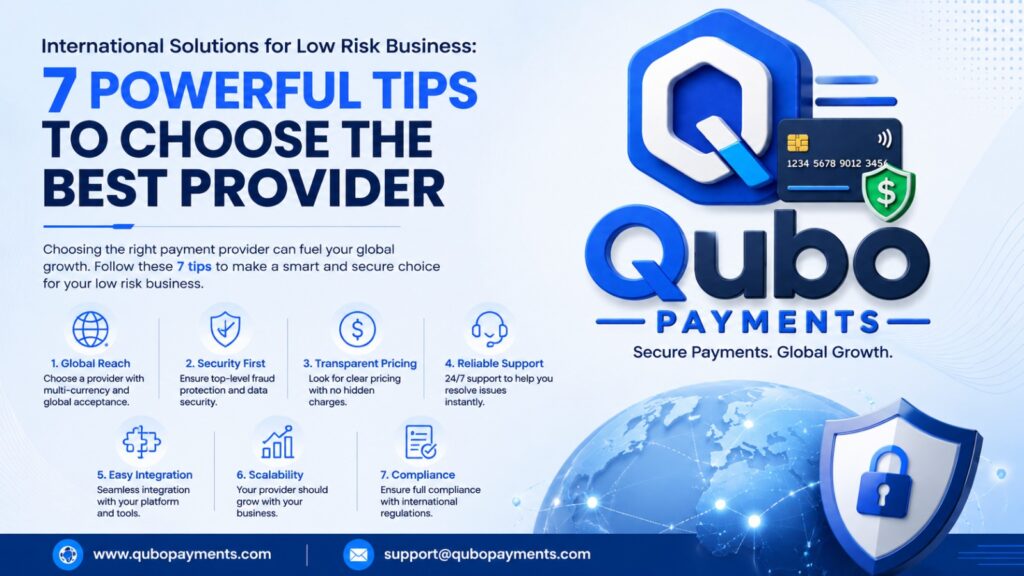
International Solutions for Low Risk Business : Expanding a low-risk business internationally opens the door to global customers, higher revenue opportunities, and long-term growth. However, choosing the right international payment and business solutions provider is one of the most important decisions for sustainable success.
Low-risk business such as ecommerce stores, SaaS companies, consulting firms, educational platforms, retail brands, and digital service providers often require secure payment processing, multi-currency support, fraud protection, and reliable international transaction management.
A low-risk business (international low-risk business) is a type of business that payment processors, banks, and financial institutions consider stable, predictable, and unlikely to cause fraud or chargeback losses, even when operating globally.
In simple terms, it means:
👉 a business that is easy for banks to trust and approve for international payments
Definition of International Low-Risk Business
An international low-risk business is a business that operates globally and is considered stable, compliant, and unlikely to generate high levels of fraud, chargebacks, or financial disputes by banks and payment processors.
A legally operating company that sells legitimate products or services across multiple countries while maintaining low chargeback rates, low fraud exposure, and predictable transaction patterns, making it easy for financial institutions and payment providers to approve and process payments.
In simple terms, it is a business that can safely accept payments from customers around the world with minimal payment risk and consistent transaction behavior.
An international low-risk business is a company that:
- sells legal products or services globally
- has low chargeback and refund rates
- follows clear delivery and billing practices
- operates in stable, well-regulated industries
- has predictable revenue patterns
Because of this, banks and payment providers see them as safe to process payments internationally.
Why It Matters in Global Payments
Payment providers and banks classify businesses based on risk because they want to reduce financial losses from:
- fraud transactions
- chargebacks
- regulatory issues
- refund disputes
Low-risk businesses are preferred because they:
- have higher payment approval rates
- require fewer reserves
- get lower processing fees
- experience fewer account restrictions
Card networks like Visa and Mastercard favor low-risk business merchants due to their stable transaction behavior and lower dispute rates.
Examples of Low-Risk Businesses
Common low-risk industries include:
1. Ecommerce (physical goods)
- Clothing brands
- Home goods
- Electronics (standard retail)
- Beauty products (non-regulated)
2. SaaS (Software as a Service)
- Project management tools
- CRM software
- Cloud storage tools
- Subscription-based software
3. Professional services
- Consulting
- Legal services
- Accounting services
- Marketing agencies
4. Education and digital learning
- Online courses
- Coaching (non-controversial niches)
- E-learning platforms
5. Retail and branded stores
- Local/global retail chains
- Franchise businesses
- Dropshipping (low-risk products only)
Common Examples
International low-risk businesses often include:
- Ecommerce stores selling physical goods
- SaaS (software-as-a-service) platforms
- Online education and e-learning platforms
- Consulting and professional services
- Digital agencies and marketing firms
- Subscription-based software tools
These industries are generally stable and widely accepted by global payment processors.
Why These Businesses Are Considered Low-Risk
Payment processors classify businesses as low risk when they have:
1. Low chargeback rates
Customers rarely dispute transactions.
2. Low fraud exposure
Products/services are harder to misuse or resell fraudulently.
3. Clear delivery model
Customers receive goods or services quickly and transparently.
4. Stable pricing and billing
No confusing subscriptions or hidden charges.
5. Legal and regulated operations
Businesses operate in well-established industries.
Benefits of Being a Low-Risk Business
Low-risk classification helps businesses get:
- Faster payment approvals
- Lower processing fees
- Fewer reserves
- Easier merchant account setup
- Stable international payment support
- Better banking relationships
For example, processors like Visa and Mastercard prefer low-risk merchants because they create fewer disputes and financial losses.
Difference Between Low-Risk and High-Risk Businesses
| Feature | Low-Risk Business | High-Risk Business |
|---|---|---|
| Chargebacks | Low | High |
| Approval difficulty | Easy | Hard |
| Processing fees | Lower | Higher |
| Fraud risk | Low | Higher |
| Industry type | Stable | Sensitive/regulatory |
International Solutions for Low Risk Business (Important Point)
When a low-risk business operates internationally, it:
- accepts payments from multiple countries
- processes multiple currencies
- uses global payment gateways
- expands customer base worldwide
Even though it is “low risk,” international operations still require:
- fraud protection tools
- multi-currency support
- global acquiring banks
- compliance with regional regulations
Final Thoughts
An International solutions for low risk business is simply a stable, legal, and predictable business that can safely accept global payments with minimal financial risk.
These businesses are easier to scale internationally because they:
- get better payment approval rates
- face fewer banking restrictions
- enjoy lower processing costs
- experience fewer payment disruptions
In short, they are the most “bank-friendly” type of business in global payment systems.
Selecting the wrong provider can lead to delayed payments, high transaction costs, poor customer experience, and growth limitations. That’s why businesses must carefully evaluate providers before making a decision.
Below are 7 powerful tips to help low-risk businesses choose the best international solutions provider.
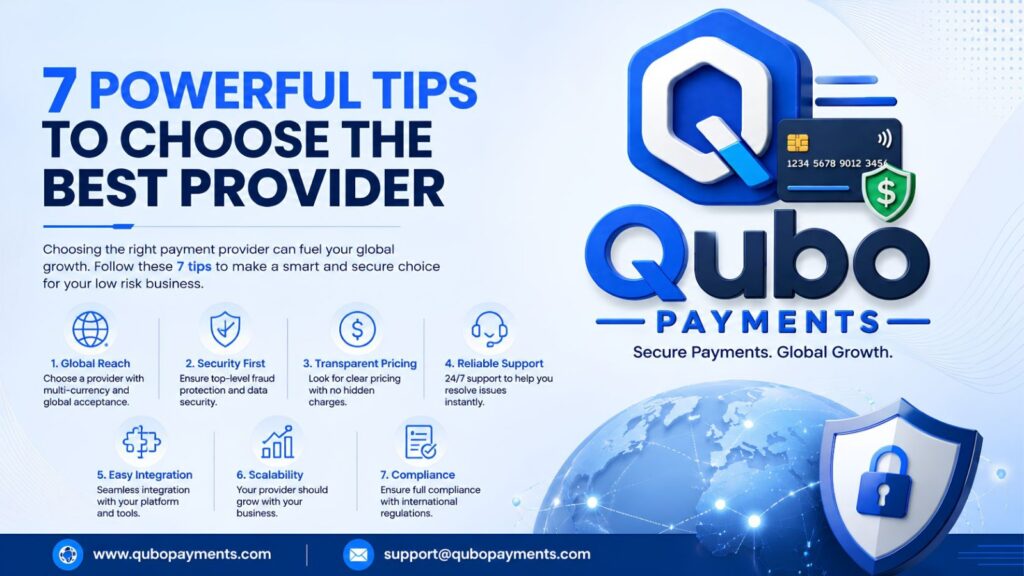
1. Check Global Payment Coverage
When choosing international solutions for a low-risk business, one of the most important factors to evaluate is global payment coverage. A provider may offer attractive pricing and features, but if it cannot support transactions smoothly in your target markets, your international growth can be limited.
Global payment coverage refers to the ability of a payment provider or financial solution company to support transactions across multiple countries, currencies, banks, and payment methods.
Businesses expanding internationally need a provider that can deliver secure, fast, and reliable payment acceptance worldwide.
Why Global Payment Coverage Matters
International customers expect a seamless payment experience. If customers face payment failures, unsupported currencies, or unavailable payment methods, they are more likely to abandon the purchase.
Strong global coverage helps businesses:
- Reach international customers easily
- Improve payment approval rates
- Increase customer trust
- Reduce cross-border transaction issues
- Support international business growth
For low-risk businesses such as ecommerce stores, SaaS platforms, consulting firms, digital agencies, and online education providers, global accessibility is essential for scaling operations successfully.
What to Check in Global Payment Coverage
Supported Countries and Regions
Before selecting a provider, verify whether they support the countries where your customers are located.
A good international provider should support major business markets such as:
- North America
- Europe
- Asia-Pacific
- Middle East
- Latin America
If your business plans to expand globally in the future, choose a provider with broad international reach instead of one limited to a few regions.
Multi-Currency Support
Customers prefer paying in their local currency.
A reliable international solutions provider should allow:
- Multi-currency transactions
- Automatic currency conversion
- Local currency settlement
- Competitive foreign exchange rates
This creates a better customer experience and helps reduce confusion during checkout.
For example:
- US customers may prefer USD
- European customers may prefer EUR
- UK customers may prefer GBP
- Indian customers may prefer INR
Offering local currency payments can improve conversion rates and customer trust.
Local Payment Methods
Different countries use different payment preferences.
An international provider should support:
- Credit cards
- Debit cards
- Digital wallets
- Bank transfers
- Regional payment methods
Examples include:
- Visa
- Mastercard
- PayPal
- Apple Pay
- Google Pay
Supporting popular payment methods helps businesses improve international customer satisfaction.
Cross-Border Transaction Reliability
International transactions may sometimes fail because of:
- Banking restrictions
- Currency mismatches
- Fraud filters
- Regional acquiring limitations
Choose providers with strong global acquiring networks and stable international banking partnerships.
Reliable providers help:
- Reduce payment declines
- Improve authorization rates
- Speed up settlements
- Maintain transaction stability
International Settlement Options
Businesses should also check how international payouts are handled.
Important questions include:
- Which currencies can settlements be received in?
- How long do international payouts take?
- Are there international transfer fees?
- Which banks are supported?
Fast and transparent settlement processes are critical for healthy cash flow management.
Benefits of Strong Global Payment Coverage
Businesses with reliable international payment support often experience:
- Higher global sales
- Better customer experience
- Lower cart abandonment
- Improved payment success rates
- Easier international expansion
Strong coverage creates a smoother payment journey for both the business and its customers.
2. Evaluate Security and Compliance Standards
Security and compliance are the backbone of any international payment solution, even for low-risk business. While low-risk industries typically experience fewer fraud issues, they are still exposed to data breaches, payment fraud, identity theft, and regulatory penalties if proper safeguards are not in place.
When choosing an international solutions provider, security should never be treated as an optional feature—it is a core requirement for long-term business stability and customer trust.
Why Security and Compliance Matter
Every online transaction involves sensitive customer data such as:
- Credit/debit card details
- Billing and shipping information
- Personal identity data
- Transaction history
If this data is not properly protected, businesses may face:
- Financial fraud losses
- Chargebacks and disputes
- Legal penalties
- Loss of customer trust
- Account suspension by processors
Even reputable payment networks like Visa and Mastercard enforce strict compliance rules to protect cardholder data and maintain global payment integrity.
Key Security Standards to Check
1. PCI DSS Compliance
One of the most important certifications in payment processing is PCI DSS (Payment Card Industry Data Security Standard).
A compliant provider ensures:
- Secure storage of card data
- Encrypted transaction processing
- Restricted access to sensitive systems
- Regular security audits
If a provider is not PCI DSS compliant, it should be avoided immediately.
2. Data Encryption
International payment solutions must use strong encryption protocols such as:
- SSL (Secure Socket Layer)
- TLS (Transport Layer Security)
This ensures that sensitive customer data cannot be intercepted during transactions.
Look for:
- End-to-end encryption
- Tokenization of card data
- Secure API communication
3. Fraud Detection and Prevention Tools
Even low-risk businesses can experience occasional fraud attempts.
A strong provider should offer:
- Real-time fraud monitoring
- AI-based risk scoring
- Transaction filtering rules
- Velocity checks (limiting repeated attempts)
- IP and location tracking
These tools help prevent unauthorized transactions and reduce financial losses.
4. 3D Secure Authentication (3DS2)
Modern international payments often require 3D Secure 2 (3DS2) for additional verification.
Benefits include:
- Reduced fraud risk
- Lower chargeback rates
- Improved transaction authentication
- Better compliance with card networks
This adds an extra layer of protection by verifying the customer’s identity during checkout.
5. Regulatory Compliance (Global Standards)
International businesses must comply with regional regulations such as:
- GDPR (Europe data protection laws)
- AML (Anti-Money Laundering policies)
- KYC (Know Your Customer verification)
A reliable provider helps businesses stay compliant across multiple jurisdictions, especially when operating globally.
6. Secure Infrastructure and Hosting
The technical infrastructure behind payment systems must be secure and stable.
Look for providers that offer:
- Secure cloud infrastructure
- Regular vulnerability testing
- DDoS protection
- Redundant server systems
- Continuous monitoring
This ensures minimal downtime and strong protection against cyberattacks.
Benefits of Strong Security & Compliance
A secure and compliant payment system helps businesses:
- Build customer trust
- Reduce fraud losses
- Lower chargeback rates
- Avoid legal and regulatory issues
- Maintain long-term payment stability
- Scale internationally with confidence
3. Compare Transaction Fees and Hidden Costs
When selecting international solutions for a low-risk business, one of the most overlooked but critical factors is pricing transparency. Even small differences in fees can significantly impact profit margins, especially for businesses processing high transaction volumes globally.
A provider may advertise attractive headline rates, but the real cost often includes multiple hidden charges that only appear after onboarding.
Why Transaction Fees Matter
Every international payment involves multiple layers of cost, including:
- Payment gateway fees
- Card network fees
- Cross-border charges
- Currency conversion fees
- Bank settlement fees
For low-risk businesses such as ecommerce, SaaS, consulting, or digital services, these costs directly affect:
- Profit margins
- Pricing strategy
- Customer acquisition costs
- Scalability
A poorly structured fee model can silently reduce profitability even when sales are growing.
Key Fee Components to Evaluate
1. Transaction Processing Fees
This is the core fee charged per transaction, usually a percentage + fixed amount.
Example structure:
- 2.5% + $0.30 per transaction (typical low-risk range)
However, international transactions may cost more due to:
- Cross-border processing
- Currency conversion
- Acquiring bank differences
Always confirm whether rates vary by region or card type.
2. Currency Conversion Fees
If you accept global payments, currency conversion is unavoidable.
Check for:
- FX markup percentage
- Real-time exchange rate usage
- Settlement currency options
Even a 3%–5% FX markup can significantly impact international revenue over time.
3. Monthly or Platform Fees
Some providers charge fixed monthly costs, such as:
- Gateway fees
- Account maintenance fees
- Software/platform subscriptions
- Compliance or reporting fees
These are often overlooked during initial evaluation but add up quickly.
4. Chargeback Fees
Even in low-risk industries, chargebacks still occur occasionally.
Common charges include:
- Fixed chargeback fee per dispute
- Investigation or arbitration fees
- Penalties for high dispute ratios
Payment networks like Visa and Mastercard also enforce strict chargeback monitoring standards, which providers must follow.
5. Settlement and Withdrawal Fees
International providers may charge for moving money to your bank account.
Watch for:
- International wire transfer fees
- Bank conversion charges
- Fast payout fees
- Minimum withdrawal thresholds
These costs vary widely between providers.
6. Rolling Reserves (Indirect Cost)
A rolling reserve is when a percentage of your revenue is held temporarily by the provider.
Example:
- 5%–10% held for 90–180 days
While not a direct fee, it affects cash flow and working capital.
Hidden Costs to Watch Carefully
Some providers advertise low fees but include hidden charges such as:
- Setup fees after onboarding
- Unexpected compliance charges
- Extra fees for international cards
- Premium support charges
- API or integration costs
- Account reactivation fees
These can significantly increase total processing costs.
How to Identify Transparent Pricing
A trustworthy international solutions provider will:
- Clearly list all fees upfront
- Provide a full pricing sheet
- Explain cross-border charges
- Disclose reserve conditions
- Offer predictable payout timelines
- Avoid vague or “custom-only” pricing secrecy
Transparency is often a strong indicator of long-term reliability.
4. Review Multi-Currency and Local Payment Support
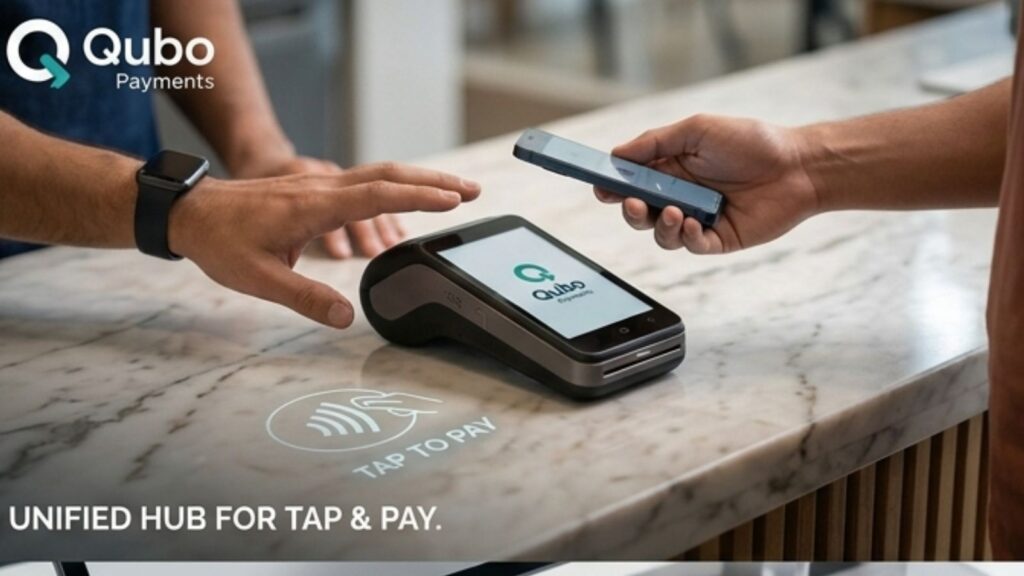
International customers prefer paying in their local currency and preferred payment method.
A strong international solutions provider should support:
- Multiple currencies
- Local debit/credit cards
- Digital wallets
- Regional payment methods
- Alternative payment solutions
This improves:
- Customer trust
- Checkout experience
- Payment approval rates
- International conversion rates
Businesses expanding globally should prioritize providers that simplify localized payments.
5. Assess Customer Support and Reliability
Payment-related issues can directly impact business revenue.
Reliable customer support is essential for:
- Technical assistance
- Settlement inquiries
- Chargeback handling
- Account management
- Emergency payment issues
Before choosing a provider:
- Check support availability (24/7 preferred)
- Read customer reviews
- Evaluate response times
- Ask about dedicated account managers
Strong support ensures smooth international operations and faster issue resolution.
6. Verify Scalability and Integration Options
Your payment infrastructure should support future business growth.
Choose a provider that offers:
- Easy API integration
- Ecommerce platform compatibility
- Subscription billing support
- Mobile payment solutions
- Scalable transaction capacity
As your business expands internationally, your provider should be able to handle increased transaction volume without operational issues.
7. Check Reputation and Industry Experience
Experience matters in international payment and business solutions.
Look for providers with:
- Positive client reviews
- Established global partnerships
- Proven transaction stability
- Strong compliance history
- Industry-specific expertise
International Aspect
The “international” part means the business:
- accepts payments from multiple countries
- processes multiple currencies
- serves a global customer base
- uses international payment gateways or acquiring banks
Even Low-Risk Business must still meet global requirements such as:
- anti-fraud controls
- currency conversion handling
- regional compliance rules
Summary
An international Low-Risk Business is essentially a globally operating, legally compliant, and financially stable business that poses minimal risk to payment processors due to its low fraud, low dispute rates, and predictable operations.
It is considered the easiest type of business to support in global payment systems and typically benefits from:
- faster approvals
- lower fees
- smoother international scaling
- fewer payment restrictions