
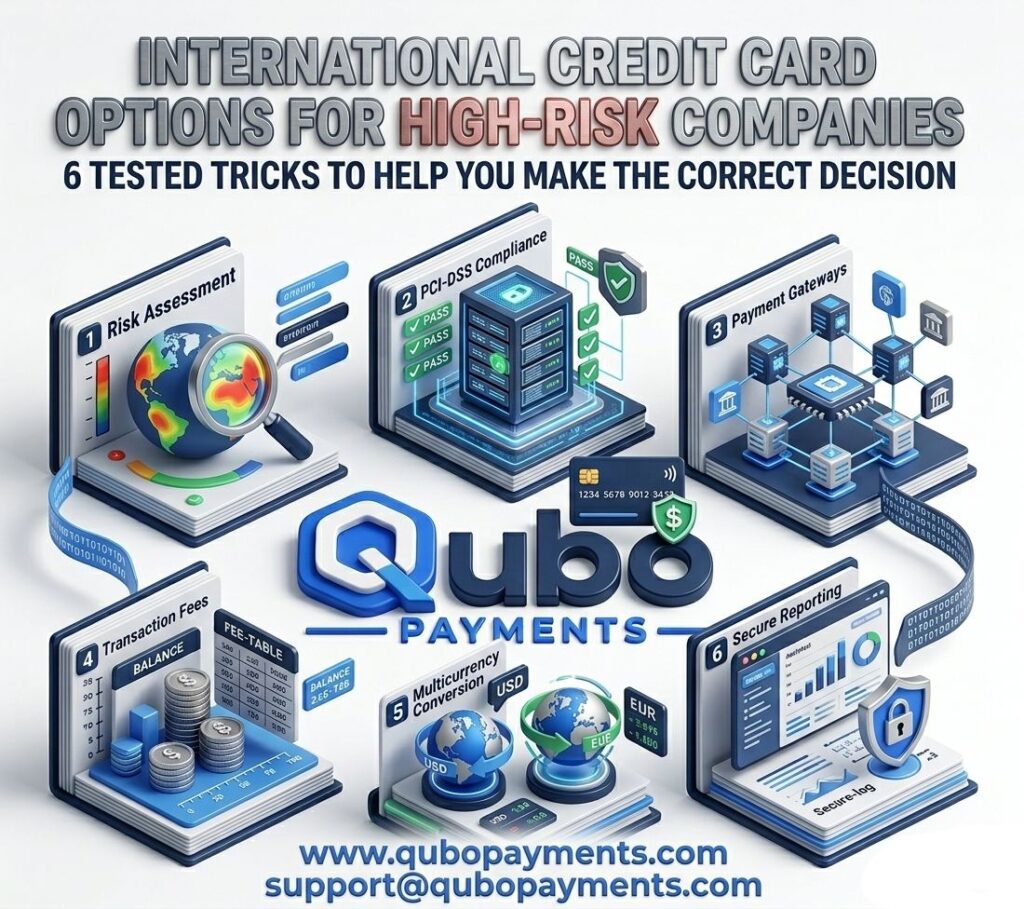
What is international Credit Card solutions
“International Credit Card Solutions” can refer to two different things:
- A generic term for companies/services that help businesses accept international credit cards
- A specific payment processing company called “International Credit Card Solutions” (often abbreviated ICCS)
If you mean the company, International Credit Card Solutions (ICCS) is a merchant services provider focused on payment processing and merchant accounts, including some higher-risk industries.
They typically offer:
- Merchant accounts
- International Credit card processing
- International payment acceptance
- Multi-currency support
- Payment gateways
- High-risk payments merchant solutions
- Chargeback/fraud tools
They mainly target:
- Ecommerce businesses
- International merchants
- Subscription businesses
- Higher-risk industries needing offshore or specialized acquiring
In practice, companies like ICCS act as intermediaries between:
- your business
- acquiring banks
- Visa/Mastercard networks
- payment gateways
Their job is to help merchants get approved for card processing and keep transactions flowing internationally.
Important distinction
A lot of “International credit card solution” providers are not banks themselves. They are:
- ISOs (Independent Sales Organizations)
- payment facilitators
- gateway providers
- high-risk merchant brokers
So the actual risk approval and fund holding usually happens through partner acquiring banks.
Things to verify before signing with any provider
Before using a company like ICCS, check:
- reserve requirements
- contract length
- early termination fees
- supported countries
- settlement currencies
- chargeback thresholds
- rolling reserve percentage
- payout timelines
- acquiring bank names
- whether they support your MCC/business model
Reviews for high-risk processors vary widely because approval quality depends heavily on the merchant category and underwriting profile.
What is high-risk payments business?
A high-risk payments business is a business that banks, payment processors, or card networks believe has a higher chance of:
- chargebacks
- fraud
- refunds
- regulatory problems
- legal disputes
- financial instability
- reputational risk
Because of that, these businesses often:
- pay higher payment processing fees
- face rolling reserves
- get stricter underwriting
- experience account freezes or shutdowns more often
Why a business becomes “high-risk”
A business becomes “high risk” when banks, payment processors, or card networks believe it has a higher probability of financial loss, fraud, disputes, regulatory trouble, or reputational damage.
The classification usually comes from a combination of these factors:
1. Industry type

Some industries historically produce more chargebacks or legal issues, so processors automatically classify them as high risk.
Examples include:
- crypto
- forex
- online gambling
- adult content
- travel
- CBD
- supplements
- subscription services
- dropshipping
- telemarketing
- ticket resale
Even fully legal businesses in these categories may be treated as high risk.
2. High chargeback rates
Chargebacks happen when customers dispute card transactions.
A processor may flag a merchant if:
- customers frequently claim fraud
- refunds are denied
- billing descriptors are confusing
- products don’t match expectations
Card networks like Visa and Mastercard closely monitor chargeback ratios.
3. International or cross-border sales
Selling internationally increases risk because of:
- stolen card fraud
- currency disputes
- jurisdiction differences
- higher refund complexity
Cross-border ecommerce businesses are often reviewed more aggressively.
4. Recurring billing or subscriptions
Subscription businesses are considered riskier because customers may:
- forget renewals
- dispute recurring charges
- cancel after billing cycles
Examples:
- SaaS
- membership sites
- coaching subscriptions
- streaming services
5. Delayed delivery or future fulfillment
If customers pay now but receive products/services later, processors face more exposure.
Examples:
- travel bookings
- event tickets
- preorders
- crowdfunding
If the business shuts down before fulfillment, the processor may absorb losses.
6. High average transaction size
Large-ticket transactions create bigger potential losses per dispute.
Examples:
- luxury products
- consulting packages
- expensive electronics
- high-end coaching
7. Fraud exposure
Businesses with elevated fraud patterns are often classified high risk.
Common fraud indicators:
- many declined transactions
- mismatched billing/shipping countries
- rapid card testing
- suspicious traffic sources
8. Regulatory or legal uncertainty
Industries operating in evolving legal environments get additional scrutiny.
Examples:
- crypto
- CBD
- online gaming
- fintech
- health claims/supplements
Processors worry about:
- changing laws
- fines
- compliance obligations
9. Business history or owner history
A merchant may be flagged because of:
- prior terminated accounts
- excessive refunds
- bankruptcies
- MATCH/TMF listings
- previous fraud investigations
Even a new company can inherit risk concerns from its owners.
10. Reputation risk for banks
Banks avoid industries that could create negative publicity or regulatory pressure.
For example:
- adult content
- gambling
- politically sensitive businesses
Sometimes the concern is reputational rather than financial.
Typical consequences of being high-risk payments
High-risk payments merchants commonly face:
- higher processing fees
- rolling reserves
- longer settlement times
- stricter underwriting
- account monitoring
- lower processing limits
But specialized high-risk payments processors still support many of these businesses legally and successfully.
What happens to high-risk payments businesses
When a business is classified as “high risk,” it can still operate normally, but banks and payment processors usually impose stricter controls and higher costs to protect themselves from potential losses.
Here’s what commonly happens:
1. Higher payment processing fees
High-risk merchants usually pay more than standard businesses.
Typical costs may include:
- processing fees around 10%–14%+
- higher per-transaction fees
- setup fees
- gateway fees
- monthly compliance fees
The higher pricing reflects increased fraud and chargeback exposure.
2. Rolling reserves
Processors often hold back part of the merchant’s revenue as security.
Example:
- 10% reserve held for 180 days
This protects the processor if customers later dispute charges or request refunds.
3. Stricter underwriting
Before approval, processors may request:
- bank statements
- processing history
- chargeback records
- supplier invoices
- company registration documents
- website reviews
- compliance documentation
Approval can take days or weeks instead of minutes.
4. Lower processing limits
Processors may initially cap:
- monthly volume
- transaction size
- daily sales amount
Limits sometimes increase after stable performance.
5. Delayed payouts
Instead of next-day funding, payouts may take:
- several days
- weekly cycles
- longer review periods
International merchants may face even slower settlement times.
6. Chargeback monitoring
Processors monitor dispute ratios closely.
Card networks like Visa and Mastercard have programs for merchants with excessive chargebacks.
If chargebacks rise too high:
- fines may occur
- reserves may increase
- accounts may be terminated
7. Risk of account freezes or shutdowns
High-risk merchants face a greater chance of:
- sudden account holds
- frozen balances
- termination notices
This often happens when:
- fraud spikes
- chargebacks rise
- prohibited activity is detected
- underwriting concerns emerge
8. Requirement for stronger fraud controls
Processors may require:
- 3D Secure (3DS)
- AVS checks
- device fingerprinting
- velocity limits
- manual review systems
Fraud prevention becomes essential rather than optional.
9. Need for specialized processors
Many mainstream platforms reject high-risk categories.
Businesses often move to providers specializing in:
- offshore acquiring
- international processing
- high-risk payments merchant accounts
10. Multiple merchant accounts become common
Larger high-risk payments businesses often maintain:
- multiple processors
- backup MIDs (Merchant IDs)
- regional acquirers
This reduces the risk of losing all payment capability from a single shutdown.
11. Potential MATCH/TMF listing
If a merchant account is terminated for serious risk issues, the business can be placed on the MATCH list (formerly TMF).
Being MATCH-listed can make future approvals much harder for several years.
Important point
High-risk payments does NOT necessarily mean illegal
“High risk” is a banking/payment classification — not a criminal one. Being “high risk” does not automatically mean:
- illegal
- fraudulent
- unsafe
It simply means the financial institutions involved believe the business has a higher probability of losses or disputes compared to ordinary merchants.
Many legitimate industries are classified high risk simply because historical financial losses are higher.
International Credit Card Solutions for Highrisk Business
If you run a business that banks classify as “high risk” — crypto, nutraceuticals, gaming, adult, travel, forex, subscriptions, coaching, dropshipping, CBD, or heavy cross-border ecommerce — you usually need a specialized international credit card merchant account rather than mainstream processors like Stripe or PayPal. Many standard PSPs terminate accounts once chargebacks or international volume rise.
The strongest setup today is usually:
- A dedicated high-risk acquiring partner
- Multiple backup MID/acquirer relationships
- Fraud + chargeback tooling
- Multi-currency settlement
- Regional routing for approvals
What to look for
The most important criteria are:
- International acquiring coverage (EU, UK, Asia, LATAM, UAE)
- Chargeback tolerance
- Reserve transparency
- Multi-currency processing
- 3DS2 / fraud prevention
- Backup MID support
- Industry specialization
- Stable long-term underwriting
High-risk merchants commonly face:
- rolling reserves (5–20%)
- higher fees (10–15%+)
- stricter underwriting
- sudden account freezes if risk controls are weak
Merchant of Record (MoR) vs Merchant Account
These are two very different ways to accept online payments internationally.
The key difference is:
- With a Merchant Account, your business is legally responsible for payment processing.
- With a Merchant of Record (MoR), another company processes payments on your behalf and becomes the legal seller for payment purposes.
1. Merchant Account Model
In this setup:
- your company owns the merchant account
- customers pay your business directly
- you control the payment stack
Typical flow:
Customer → Your Website → Payment Processor → Your Merchant Account → Your Bank
Advantages
More control
You control:
- branding
- checkout
- customer data
- pricing
- subscriptions
- fraud systems
Lower long-term fees
Usually cheaper at scale than MoR models.
Better enterprise flexibility
Good for:
- large ecommerce
- marketplaces
- established SaaS
- custom billing systems
Disadvantages
You handle compliance
You are responsible for:
- PCI compliance
- tax/VAT
- fraud management
- disputes
- chargebacks
Harder approvals
High-risk or international businesses may struggle to get approved.
Greater shutdown risk
If processors see elevated risk, they may:
- freeze funds
- terminate accounts
- increase reserves
2. Merchant of Record (MoR) Model
With MoR, a third-party company legally processes payments for you.
The MoR:
- becomes the “seller” on paper
- handles payment compliance
- manages taxes/VAT
- often absorbs some fraud risk
Flow:
Customer → MoR Platform → MoR Processes Payment → You Receive Payout
Advantages
Easier international expansion
MoRs simplify:
- global tax collection
- VAT/GST
- currency handling
- compliance
Easier approval
Useful for:
- startups
- creators
- non-US companies
- digital products
- smaller SaaS businesses
Reduced operational burden
The MoR often handles:
- fraud tools
- tax filings
- payment regulations
- invoicing
Disadvantages
Higher fees
MoRs usually charge more because they absorb more responsibility.
Less control
You may lose control over:
- checkout customization
- customer billing experience
- dispute handling
Some industries not accepted
Many MoRs avoid:

- gambling
- adult
- crypto
- CBD
- heavily regulated industries
Which is better?
Merchant Account is better if:
- you process high volume
- you need full control
- you have an established company
- you can manage compliance
- you operate a custom ecommerce/payment system
MoR is better if:
- you are a startup
- you sell digital products/SaaS
- you want easier international sales
- you lack compliance infrastructure
- you want simpler tax handling
High-risk businesses: which works better?
For high-risk industries:
Merchant Accounts

Usually necessary for:
- crypto
- gambling
- adult
- CBD
- forex
- high-volume subscriptions
MoR
Works better for:
- software
- SaaS
- creators
- digital products
- online education
Many high-risk industries cannot use mainstream MoR platforms because of banking restrictions.
Simple comparison
| Feature | Merchant Account | Merchant of Record |
| Legal seller | Your company | MoR company |
| Chargeback liability | You | Mostly MoR |
| Tax handling | You | MoR |
| PCI compliance | You | Mostly MoR |
| Control | High | Medium |
| Fees | Lower | Higher |
| Approval difficulty | Harder | Easier |
| Best for | Large/custom businesses | Startups & SaaS |
| High-risk support | Stronger | Limited |
Practical setup that works best internationally
For international credit card setup businesses — especially higher-risk ecommerce, SaaS, subscriptions, coaching, crypto-adjacent, or cross-border operations — the most reliable setup is usually a multi-layer payment infrastructure, not a single processor.
A practical structure often looks like this:
Customers Worldwide ↓Checkout / Payment Gateway ↓Fraud + 3DS Layer ↓Primary Acquirer ↓Backup Acquirer(s) ↓Multi-currency Settlement ↓Business Bank Accounts1. Use a primary processor + backup processor
Do not depend on only one provider.
International Credit Card businesses commonly maintain:
- a primary MID (Merchant ID)
- one backup processor
- sometimes regional acquirers
Why:
- account freezes happen
- risk reviews happen
- regional outages happen
- approval rates vary by country
2. Use multi-currency processing
International Credit Card customers convert better when charged in local currency.
Important capabilities:
- dynamic currency support
- local acquiring
- local card routing
- FX optimization
Benefits:
- higher approval rates
- lower decline rates
- lower FX friction
- improved customer trust
3. Add strong fraud prevention
International Credit Card fraud is one of the biggest risks.
Minimum protections:
- 3D Secure 2 (3DS2)
- AVS verification
- CVV verification
- device fingerprinting
- velocity checks
- geolocation checks
Without fraud controls, processors may:
- raise reserves
- freeze accounts
- terminate merchants
4. Manage chargebacks aggressively
Chargebacks are the main reason many international credit card merchants fail.
Best practices:
- clear billing descriptors
- visible refund policy
- fast customer support
- recurring billing reminders
- delivery tracking
- dispute automation
Goal:
Keep chargeback ratio under ~1%.
5. Separate operational banking from reserves
Do not keep all funds in one account.
A safer structure:
- operating account
- tax account
- reserve buffer account
- payout holding account
International Credit Card merchants often face:
- delayed settlements
- reserve increases
- temporary freezes
Liquidity planning matters.
6. Use regional acquiring when scaling
Large international businesses route transactions by region.
Example:
- EU traffic → EU acquirer
- US traffic → US acquirer
- LATAM traffic → local LATAM partner
Benefits:
- better authorization rates
- lower interchange costs
- reduced fraud flags
7. Consider Merchant of Record (MoR) if you are smaller
If you are:
- early-stage SaaS
- creator business
- digital product company
- non-US founder
…then an MoR can simplify international credit card expansion.
They help with:
- VAT/GST
- tax filings
- global compliance
- international billing
8. Build redundancy early
Serious international businesses often prepare for processor failures before they happen.
Common strategy:
- multiple gateways
- multiple acquirers
- backup domains/checkouts
- reserve cash buffer
- diversified banking
This is especially important for:
- high-risk industries
- subscription businesses
- fast-scaling ecommerce
The key idea
The businesses that survive internationally usually:
- diversify processors
- control fraud tightly
- manage chargebacks proactively
- maintain reserve liquidity
- avoid dependency on a single bank or platform
That matters even more in high-risk sectors where sudden processor shutdowns are relatively common.
Red flags to avoid
Red flags to avoid with international Credit Card /high-risk payment processors
Choosing the wrong processor can lead to:
- frozen funds
- sudden shutdowns
- huge reserves
- legal/compliance problems
- inability to accept payments
These are the biggest warning signs to watch for.
1. “Guaranteed approval” claims
No legitimate processor can guarantee approval before underwriting.
Real approval depends on:
- business model
- chargeback history
- geography
- compliance
- processing volume
If a company says:
“100% guaranteed approval”
…without reviewing documents, that’s a major warning sign.
2. Hidden reserve terms
Some providers quietly impose:
- rolling reserves
- delayed payouts
- sudden reserve increases
You should always ask:
- reserve percentage
- reserve duration
- release conditions
- whether reserves can increase later
Get this in writing.
3. Long contracts with heavy cancellation fees
Watch for:
- 2–5 year contracts
- auto-renewals
- expensive early termination fees
Some processors lock merchants into difficult agreements after onboarding.
4. Shared or aggregated merchant accounts
Some providers process transactions under shared master accounts instead of giving you a dedicated MID.
Risks:
- another merchant’s fraud affects you
- mass shutdowns
- less underwriting transparency
- higher freeze risk
Dedicated merchant accounts are usually safer for scaling businesses.
5. No transparency about acquiring banks
A trustworthy provider should clearly explain:
- who the acquiring bank is
- where processing occurs
- what jurisdictions are involved
If they avoid answering:
“Which bank actually holds the merchant account?”
…be cautious.
6. Requests to hide your real business model
Major red flag.
Examples:
- fake product descriptions
- misleading websites
- “descriptor masking”
- transaction laundering
- fake MCC coding
This can violate rules from Visa and Mastercard.
Possible consequences:
- account termination
- frozen funds
- MATCH listing
- legal exposure
7. Extremely low pricing for high-risk processing
High-risk processing is expensive.
If someone offers:
- ultra-low fees
- no reserve
- instant approval
- unlimited volume
…for a risky business category, the setup may not be sustainable.
Sometimes these providers:
- disappear suddenly
- lose banking relationships
- collapse under fraud exposure
8. No fraud or chargeback tools
A serious processor should support:
- 3DS2
- AVS/CVV checks
- fraud screening
- chargeback alerts
- dispute management
If they offer none of these, risk management may be weak.
9. Poor payout transparency
Always verify:
- payout schedule
- settlement currencies
- reserve deductions
- withdrawal methods
- international credit card transfer fees
Some merchants discover problems only after processing begins.
10. Bad reputation for frozen funds
Search for patterns involving:
- withheld balances
- delayed payouts
- sudden shutdowns
- unreachable support
Some complaints are normal in high-risk processing, but repeated reports matter.
11. No compliance or KYC process
Legitimate processors require:
- identity verification
- business documents
- compliance review
- beneficial ownership checks
If approval happens with almost no checks, the provider may itself be risky.
12. Overreliance on offshore secrecy
Offshore processing is not automatically bad.
But beware providers promoting:
- anonymous structures
- hidden ownership
- “untraceable payments”
- evasion of card network rules
Those setups often become unstable.
13. Weak customer support
In high-risk processing, support quality matters enormously.
You may eventually need help with:
- reserve reviews
- disputes
- compliance requests
- emergency shutdowns
Slow or unreachable support can become a serious operational problem.
Practical checklist before signing
Ask for:
- full fee schedule
- reserve agreement
- payout terms
- acquiring bank details
- supported MCC/business category
- chargeback thresholds
- termination conditions
- compliance obligations
And always read:
- merchant agreement
- reserve clauses
- termination clauses
Strong signs of a better provider
Better processors usually:
- explain risks clearly
- disclose reserve structures
- understand your industry
- provide fraud tooling
- discuss compliance openly
- avoid unrealistic promises
- offer scalable acquiring relationships
Transparency is usually a good sign in high-risk payments.