
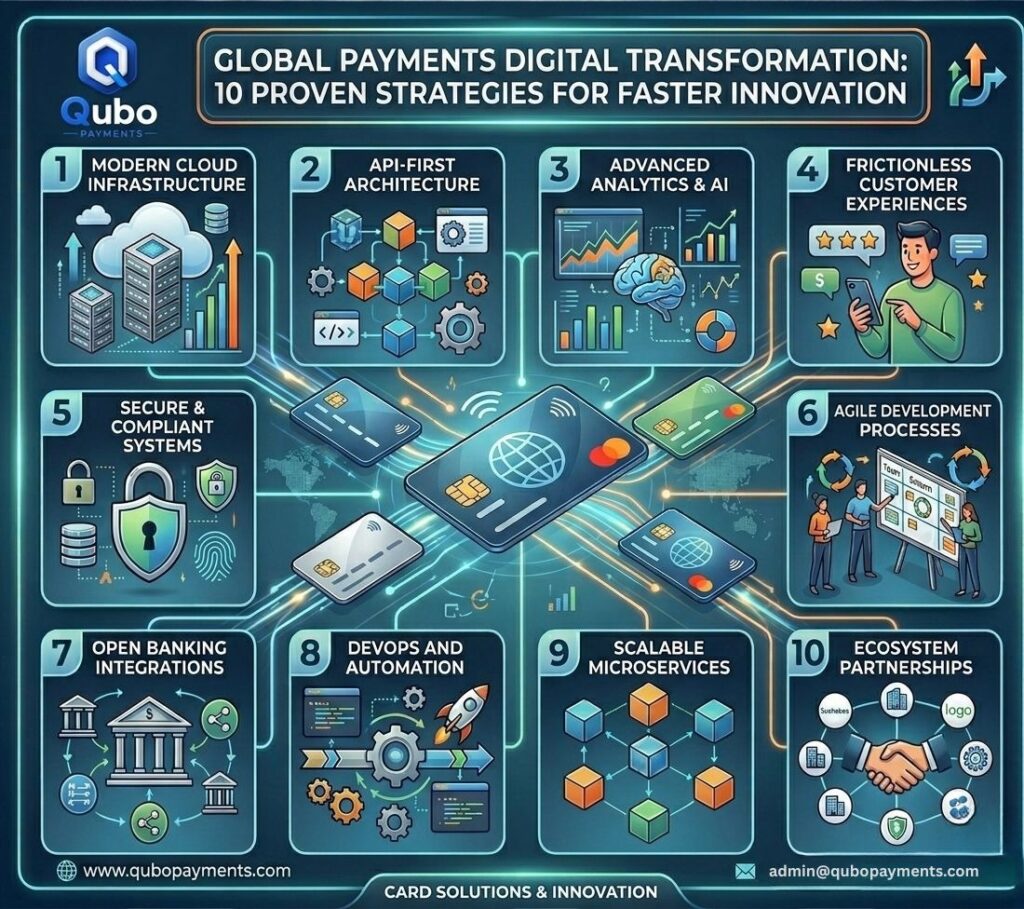
Global payments play a major role in supporting digital transformation worldwide, meaning the shift of economies, businesses, and governments from traditional physical systems to digital, technology-driven systems. In simple terms, global payment systems act as a core engine of digital economies, enabling everything from mobile banking to e-commerce and fintech innovation.
What is Digital Transformation in Global Payments?
Digital transformation is the process of using digital technologies to fundamentally change how an organization operates, delivers value to customers, and adapts to changing markets.
It’s not just “adding new software.” It usually involves rethinking business processes, culture, customer experience, and decision-making using technology.
Core Areas of Digital Transformation
1. Customer Experience
Companies use digital tools to improve how customers interact with them.
Examples:
- Mobile apps
- AI chatbots
- Personalized recommendations
- Online self-service portals
For example, Netflix transformed entertainment by shifting from DVD rentals to a digital streaming platform powered by recommendation algorithms.
2. Operational Processes
Organizations digitize and automate internal workflows to improve efficiency.
Examples:
- Cloud computing
- Workflow automation
- Data analytics dashboards
- Robotic Process Automation (RPA)
A manufacturer might use IoT sensors to predict equipment failures before they happen.
3. Business Models
Digital transformation can create entirely new ways of making money.
Examples:
- Subscription services
- Digital marketplaces
- Platform ecosystems
- Software-as-a-Service (SaaS)
For instance, Adobe transformed from selling boxed software to a cloud subscription model.
4. Data-Driven Decision Making
Organizations collect and analyze data to make faster and smarter decisions.
Examples:
- Predictive analytics
- Machine learning
- Real-time reporting
- Customer behavior analysis
Common Technologies Involved
- Cloud computing
- Artificial Intelligence (AI)
- Big data analytics
- Internet of Things (IoT)
- Cybersecurity
- Mobile platforms
- APIs and integrations
- Automation tools
Why Companies Pursue It
Digital transformation is often driven by:
- Changing customer expectations
- Competition from digital-native companies
- Need for efficiency and cost reduction
- Remote and hybrid work
- Faster innovation cycles
Real-World Examples
- Amazon digitized retail and logistics with cloud infrastructure and automation.
- Uber transformed transportation through mobile platforms and real-time matching.
- Spotify changed music consumption from ownership to streaming.
Important Distinction
Digitalization ≠ Digital Transformation
- Digitization = converting analog information to digital (e.g., scanning paper files)
- Digitalization = using digital tools to improve existing processes
- Digital transformation = fundamentally redesigning the business using digital capabilities
Organizations use technology not just to “upgrade computers,” but to change how they serve customers, operate, compete, and make money.
Breaking it down:
- Strategic use of technology
Technology is used intentionally to support business goals — not just because it’s new or trendy. - Improve or reinvent
Some companies make existing processes faster and cheaper, while others completely redesign their business model. - How an organization creates value
“Creating value” means delivering benefits to customers, employees, or stakeholders — through products, services, convenience, speed, quality, or innovation.
Simple Examples
Improve existing value
A bank adds a mobile app so customers can transfer money instantly instead of visiting a branch.
The bank still provides banking services, but in a more efficient and convenient way.
Reinvent value
A taxi company becoming a ride-sharing platform similar to Uber.
The business changes from traditional dispatching to a digital platform connecting drivers and riders in real time.
How Global Payments Support Digital Transformation
Global payments support digital transformation by enabling businesses to operate faster, more digitally, and across international markets with seamless financial transactions.
In modern digital businesses, payments are no longer just a “back-office” function — they are part of the customer experience, operational efficiency, and business strategy.
Key Ways Global Payments Support Digital Transformation
1. Enabling Digital Commerce
Global payment systems allow businesses to sell products and services online anywhere in the world.
Examples:
- E-commerce websites
- Mobile apps
- Subscription platforms
- Digital marketplaces
Companies can accept:
- Credit/debit cards
- Digital wallets
- Bank transfers
- Real-time payments
- Cross-border payments
Platforms like Nium provide infrastructure for global real-time payouts and multi-currency transactions through APIs. (Nium)
2. Improving Customer Experience
Digital consumers expect:
- Instant payments
- Multiple payment options
- Secure transactions
- Mobile-first experiences
Global payments technologies support:
- One-click checkout
- QR payments
- Contactless payments
- Embedded finance
- Real-time transaction tracking
For example, India’s Unified Payments Interface (UPI) transformed payments through instant mobile transactions and QR-based payments. (The Times of India)
3. Supporting Global Expansion
Digital transformation often means entering international markets.
Global payments platforms help businesses:
- Accept multiple currencies
- Handle foreign exchange (FX)
- Comply with local regulations
- Process cross-border transactions
- Pay international suppliers and employees
Companies such as Currencycloud and Fin provide infrastructure for international money movement and multi-currency operations. (Currencycloud)
4. Enabling Automation and Efficiency
Modern payment systems integrate with:
- ERP systems
- Accounting software
- CRM platforms
- Supply chain systems
This enables:
- Automated invoicing
- Faster reconciliation
- Real-time reporting
- Reduced manual work
- Better cash-flow visibility
Cloud-native payment platforms also improve scalability and operational agility. (TAS)
5. Using APIs and Cloud Technology
Digital transformation depends heavily on APIs and cloud computing.
Modern payment platforms offer:
- API-first architecture
- Real-time integrations
- Embedded payment services
- Scalable cloud infrastructure
6. Enhancing Data and Analytics
Digital global payments systems generate valuable business intelligence.
Organizations can analyze:
- Customer buying behavior
- Payment trends
- Fraud patterns
- Geographic demand
- Revenue performance
This supports:
- Better decision-making
- AI-driven personalization
- Fraud detection
- Predictive analytics
7. Supporting Financial Innovation
Global payments are a foundation for:
- FinTech platforms
- Open banking
- Digital wallets
- Buy Now Pay Later (BNPL)
- Blockchain-based payments
- Embedded finance
FinTech innovation is reshaping how businesses and consumers interact with money worldwide. (Reddit)
Simple Summary
Global payments support digital transformation by helping businesses:
- operate digitally,
- serve global customers,
- automate financial processes,
- improve customer experiences,
- and innovate faster.
In many organizations, modern payment infrastructure becomes a core part of the digital business model itself.
Ways to Global Payments Support Digital Transformation
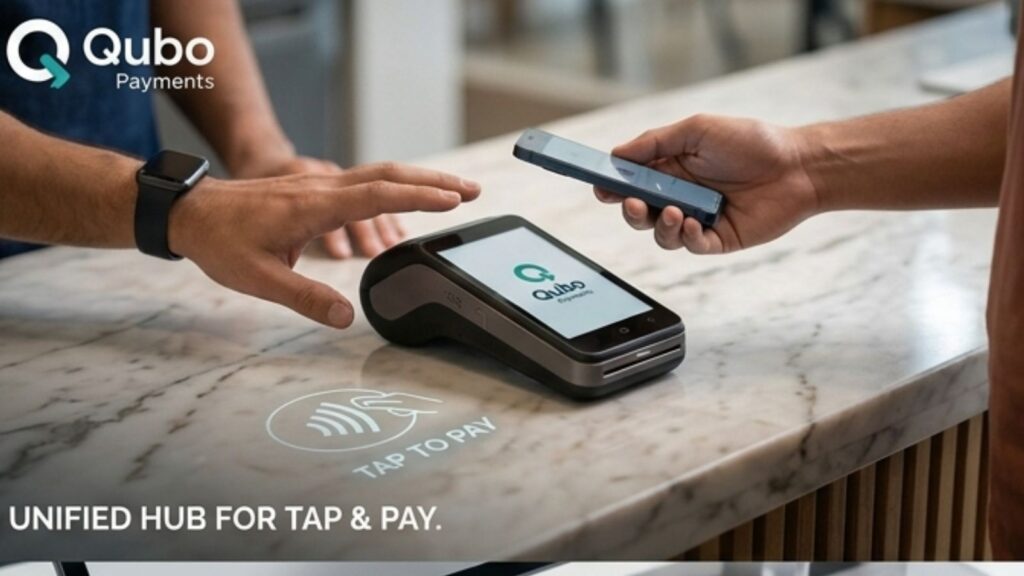
A. Shift from Cash to Digital Economy
Global payment systems reduce dependency on cash by enabling:
- Mobile payments
- QR code payments
- Online transfers
Impact:
Economies become more digital, transparent, and trackable.
B. Enabling Mobile and App-Based Ecosystems
Modern global payments work through:
- Mobile apps
- Banking apps
- Fintech platforms
Example:
Apps like Google Pay, PayPal, and UPI-based platforms allow instant transactions.
Result:
People can access financial services anytime, anywhere.
C. Growth of Fintech Innovation
Global payments encourage fintech companies to build:
- Digital wallets
- Payment gateways
- Cross-border transfer apps
- AI-based financial tools
Impact:
Entire financial ecosystems become technology-driven.
D. Support for E-Commerce and Digital transformation Businesses
Digital transformation in commerce depends heavily on global payments.
How it helps:
- Enables online checkout systems
- Supports international sales
- Automates payment processing
Example:
An online store can accept payments from customers across multiple countries instantly.
E. Cloud-Based Financial Infrastructure
Modern payment systems use cloud technology to:
- Process millions of transactions
- Ensure scalability
- Improve speed and reliability
Benefit:
Financial services become more efficient and globally connected.
F. Real-Time and Automated Transactions
Global payments enable:
- Instant money transfers
- Automated billing systems
- Subscription-based payments
Impact:
Businesses no longer depend on manual financial processes.
G. API Integration and Open Banking
Global payment systems use APIs (Application Programming Interfaces) to:
- Connect banks with apps
- Share financial data securely
- Enable third-party services
Result:
A fully connected digital financial ecosystem is created.
H. Financial Inclusion as Part of Digital Transformation
Digital transformation is incomplete without inclusion.
Global payments help by:
- Bringing unbanked users into the system
- Enabling mobile-based banking in rural areas
- Supporting low-cost digital transactions
Real-World Example
Real-World Examples of Global Payments
1. PayPal
How it supports digital transformation
- Enables businesses to accept payments globally online
- Supports multiple currencies and cross-border transactions
- Integrates with e-commerce platforms and mobile apps
- Provides digital wallets and one-click checkout
Real-world impact
Small businesses can instantly sell products internationally without building their own banking infrastructure.
Example:
A seller in the Netherlands can receive payments from customers in the US, Japan, or Brazil through digital payment gateways.
2. Stripe
How it supports digital transformation
- Offers API-based payment infrastructure
- Supports subscription billing and recurring payments
- Enables embedded payments in apps and platforms
- Automates payment processing and reporting
Real-world impact
Digital companies like SaaS startups can launch globally very quickly using Stripe’s payment APIs.
Example:
A software company can automatically bill customers monthly in different currencies worldwide.
India’s UPI (Unified Payments Interface)

How it supports digital transformation
- Enables instant bank-to-bank mobile payments
- Uses QR-code and smartphone-based transactions
- Reduces cash dependency
- Supports financial inclusion
Real-world impact
Millions of small merchants and street vendors now accept digital payments instantly.
Example:
A customer scans a QR code and pays directly from a banking app within seconds.
Amazon Global Marketplace

How it supports digital transformation
- Processes millions of digital payments daily
- Supports global e-commerce transactions
- Uses AI for fraud detection and payment security
- Integrates logistics, payments, and customer data
Real-world impact
Businesses can reach international customers through a fully digital platform.
Example:
A small business can sell products globally using Amazon’s integrated digital payment ecosystem.
Simple Conclusion
Global digital payment systems help businesses:
- sell internationally,
- automate transactions,
- improve customer convenience,
- and support fully digital business operations.
They are a major foundation of modern digital transformation.
Why It Matters Globally
Why Global Payments Digitally Matter
Global digital payments matter because they make international business faster, more connected, and more accessible in the digital economy.
They impact businesses, governments, and consumers worldwide.
1. Supports Global Commerce
Digital payments allow businesses to sell products and services across borders easily.
Benefits:
- International online shopping
- Global subscriptions and SaaS services
- Cross-border trade
- Faster international transactions
For example, platforms like PayPal and Stripe enable businesses to accept payments from customers worldwide.
2. Improves Financial Inclusion
Many people do not have access to traditional banking services.
Digital payments help by enabling:
- Mobile banking
- Digital wallets
- QR-code payments
- Low-cost money transfers
Systems like India’s UPI allow millions of people and small merchants to participate in the digital economy using smartphones.
3. Increases Speed and Convenience
Traditional international payments can take days.
Digital payment systems provide:
- Real-time transactions
- 24/7 payment processing
- Instant confirmations
- Faster business operations
This improves customer satisfaction and operational efficiency.
4. Drives Economic Growth
Digital payment infrastructure helps economies grow by:
- Encouraging e-commerce
- Supporting startups and FinTech innovation
- Increasing transaction transparency
- Reducing cash-handling costs
Countries with strong digital payment ecosystems often experience faster digital economic development.
5. Enables Digital Transformation
Modern businesses rely on digital payments to:
- automate operations,
- support remote services,
- run subscription models,
- and deliver digital customer experiences.
Without digital payment infrastructure, many online business models would not function effectively
6. Enhances Security and Transparency
Compared to cash transactions, digital payments can provide:
- Fraud monitoring
- Encryption and authentication
- Transaction tracking
- Better financial records
This helps businesses and governments reduce fraud and improve compliance.
7. Supports the Global Payments Digital Economy
Digital payments are essential for:
- E-commerce
- Streaming services
- Gig economy platforms
- Online education
- Cloud software services
- International freelancing
Companies such as Amazon, Netflix, and Uber depend heavily on digital payment systems.
Simple Summary
Global digital payments matter because they:
- connect businesses and customers worldwide,
- make transactions faster and easier,
- support financial inclusion,
- enable digital transformation,
- and power the modern digital economy.
Future of Digital Transformation in Payments
Future of Digital Transformation in Payments
The future of digital transformation in payments is moving toward systems that are faster, more automated, more global, and increasingly invisible to users. Payments are shifting from something people “do” to something that simply “happens in the background.”
1. Embedded Global Payments (Payments Disappear Into Apps)
Payments will be built directly into everyday platforms rather than separate checkout steps.
Examples:
- Ride booking apps paying automatically after a trip
- E-commerce “buy now” without checkout pages
- Subscription services renewing seamlessly
Companies like Stripe already enable embedded payment APIs that power this trend.
👉 Future direction: “No checkout” experiences.
2. Real-Time Global Payments
Global Payments are moving toward instant settlement across countries.
What this means:
- Money transfers in seconds, not days
- 24/7 cross-border payments
- Lower transaction fees
- Better cash flow for businesses
Systems like instant payment networks and real-time rails are expanding globally.
👉 Future direction: a truly “always-on” global money network.
3. AI-Powered Global Payments
Artificial intelligence will automate and optimize payment systems.
Use cases:
- Fraud detection in real time
- Smart payment routing (cheapest/fastest path)
- Predicting failed transactions before they happen
- Personalized financial offers
👉 Future direction: payments that self-optimize and self-protect.
4. Digital Wallet Dominance
Physical cards and cash will continue to decline.
Growth areas:
- Mobile wallets
- Super apps (payments + shopping + banking)
- Contactless payments (NFC, QR)
- Biometric authentication (face/fingerprint)
Companies like PayPal and others are expanding digital wallet ecosystems
5. Open Banking and API Ecosystems
Banks and FinTech companies will increasingly connect through APIs.
Benefits:
- Secure data sharing between financial services
- Faster onboarding for financial products
- More personalized financial services
- Innovation from third-party developers
👉 Future direction: financial services become “plug-and-play.”
6. Blockchain and Tokenized Payments
Blockchain will influence some parts of global payments.
Potential uses:
- Cross-border settlement
- Stablecoins for fast transfers
- Smart contracts for automatic payments
- Reduced reliance on intermediaries
👉 Future direction: hybrid systems (traditional + blockchain rails).
7. Hyper-Personalized Commerce
Global Payments systems will adapt to user behavior.
Examples:
- Buy Now Pay Later (BNPL) offers at checkout
- Dynamic pricing based on risk or profile
- Personalized loyalty rewards
- Subscription optimization suggestions
👉 Future direction: payments become part of customer experience design.
8. Stronger Security and Identity Systems
Security will evolve beyond passwords and cards.
Trends:
- Biometric authentication
- Behavioral identity (how you type, tap, or swipe)
- AI fraud prevention
- Tokenized payment credentials
👉 Future direction: identity becomes the new “password.”
9. Financial Inclusion at Scale
Digital transformation will bring billions more people into the financial system.
Drivers:
- Mobile-first banking
- Low-cost digital wallets
- Government-backed digital currencies in some regions
- Offline-to-online payment bridges
👉 Future direction: near-universal access to digital financial services.
Simple Summary
The future of digital global payments is:
- Instant
- Global
- Invisible (embedded)
- AI-driven
- Highly secure
- Widely accessible
Conclusion
Global payments support digital transformation worldwide by replacing traditional financial systems with fast, secure, and technology-driven payment solutions. They enable mobile banking, fintech innovation, e-commerce growth, and real-time transactions—ultimately building a fully digital global economy.
Digital transformation is reshaping how businesses, governments, and individuals interact, operate, and create value in an increasingly connected world. At the center of this shift are digital technologies—especially global payment systems—that make modern digital ecosystems possible.
Supporting digital transformation worldwide means enabling the infrastructure that allows information, services, and money to move instantly, securely, and across borders. Without this foundation, many of today’s digital innovations—such as e-commerce platforms, subscription services, gig economy apps, and global SaaS businesses—would not function at scale.
Global payments systems play a particularly critical role in this transformation. They remove traditional barriers such as geography, currency differences, and banking delays. As a result, businesses of all sizes can participate in the global economy, reach new markets, and operate more efficiently. At the same time, consumers benefit from faster transactions, greater convenience, and more inclusive access to financial services.
Organizations such as Stripe, PayPal, and large digital platforms like Amazon demonstrate how integrated payment ecosystems enable end-to-end digital experiences—from discovery to purchase to delivery—within a single seamless flow.
Beyond commerce, digital transformation supported by payments also drives broader societal impact. It promotes financial inclusion by bringing unbanked populations into the formal economy, increases transparency in transactions, and strengthens economic resilience through real-time financial infrastructure. Governments and institutions also benefit through improved tax collection, reduced cash dependency, and better economic data for decision-making.
Looking ahead, the importance of supporting digital transformation worldwide will continue to grow as technologies like artificial intelligence, blockchain, and real-time payment systems become more deeply integrated into everyday life. The future economy will depend on systems that are not only digital, but also intelligent, interoperable, and universally accessible.
In conclusion, supporting digital transformation globally is not just about adopting new technologies—it is about building a connected, efficient, and inclusive digital economy. Global payment systems serve as one of its most essential foundations, enabling innovation, accelerating growth, and ensuring that the benefits of the digital era are accessible to businesses and individuals everywhere.