
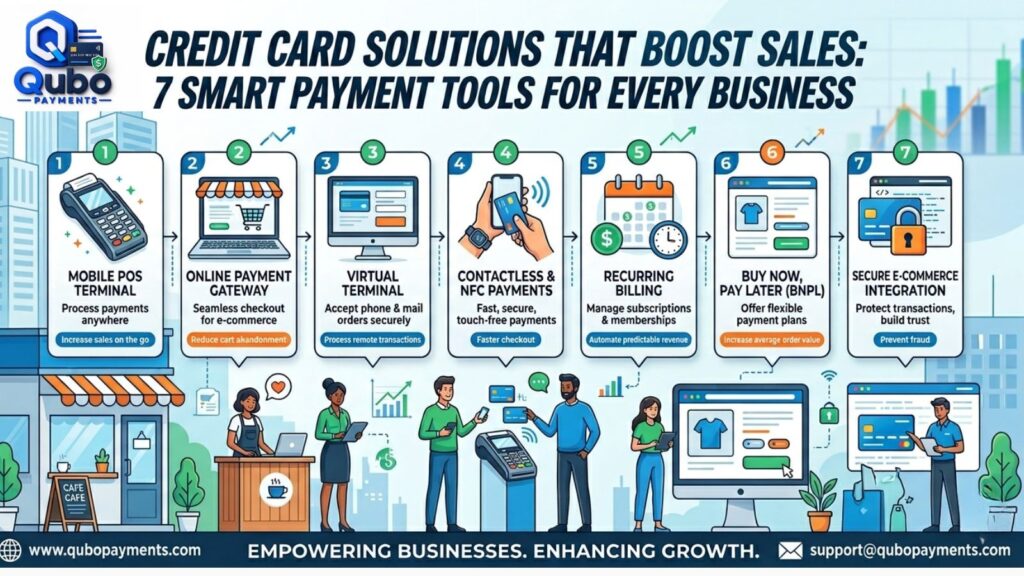
Credit card solutions help businesses accept payments securely through physical stores, websites, mobile apps, or remote channels. Modern payment systems include POS terminals, online payment gateways, mobile payment apps, recurring billing systems, fraud protection, analytics, and global transaction support. Businesses of all sizes—from startups and retailers to enterprises and eCommerce brands—use these solutions to improve customer convenience, increase sales, and streamline operations.
What Is a Credit Card Solutions?
A credit card solutions is a broad term for any system, service, or platform that enables businesses or consumers to issue, process, manage, or accept credit card payments.
The phrase can mean different things depending on context:
For Businesses
A credit card solutions often includes:
- Payment processing — accepting card payments online, in-store, or via mobile.
- Merchant accounts — services that let businesses receive funds from card transactions.
- Fraud protection — tools to detect suspicious activity.
- Billing & invoicing — recurring payments, subscriptions, or payment links.
- POS systems — hardware/software for retail checkout.
- Analytics & reporting — transaction tracking and financial insights.
For Consumers
It can refer to:
- A specific credit card product
- A debt-management or balance-transfer service
- Mobile wallet integration
- Rewards and financing programs
Examples:
- Cashback cards
- Travel rewards cards
- Buy-now-pay-later financing
- Credit-building programs
In Banking & Fintech
A “credit card solutions” may also mean the infrastructure behind cards:
- Card issuing APIs
- Virtual cards
- Embedded finance platforms
- Banking-as-a-service systems
Examples:
Simple Example
If you run an online store, your “credit card solutions” might combine:
- A checkout page
- A payment gateway
- Fraud detection
- Card processing
- Settlement into your bank account
All of that together forms the payment solution.
Main Components of a Credit Card Solutions
1. Payment Gateway
Securely transmits payment information between the customer, merchant, and processor.
Functions
- Encryption
- Tokenization
- Fraud checks
- Online checkout handling
2. Payment Processor
Routes card transactions between banks and card networks.
Responsibilities
- Authorization requests
- Settlement coordination
- Transaction routing
- Merchant connectivity
3. Merchant Account
A bank account that temporarily holds funds from card transactions before transfer to the business bank account.
4. Card Networks
The infrastructure connecting issuing banks and merchants.
Major networks:
- Visa
- Mastercard
- American Express
- Discover
5. Issuing Banks
Banks that provide credit cards to consumers.
Responsibilities
- Approve/decline transactions
- Extend credit
- Detect fraud
- Manage cardholder accounts
6. Fraud Prevention Systems
Protect against:
- Stolen cards
- Chargebacks
- Identity theft
- Unauthorized transactions
Modern systems use:
- AI fraud detection
- Behavioral analytics
- Device fingerprinting
- Real-time monitoring
Types of Credit Card Solutions
Ecommerce Payment Solutions
Designed for online businesses.
Features
- Online checkout
- Subscription billing
- Digital wallets
- Multi-currency support
Point-of-Sale (POS) Solutions
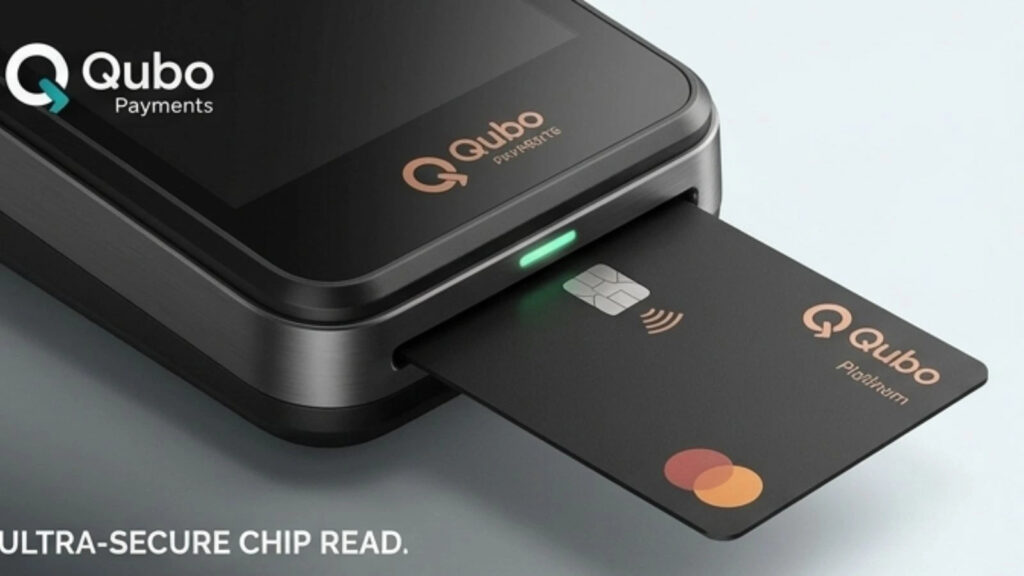
Used in physical stores.
Features
- Card terminals
- Contactless payments
- Receipt printing
- Inventory integration
Mobile Payment Solutions
Allow payments through smartphones and digital wallets.
Examples:
- Apple Pay
- Google Pay
Card Issuing Platforms
Enable fintechs and businesses to create their own branded cards.
Examples:
Subscription Billing Solutions
Automate recurring payments.
Used By
- SaaS companies
- Streaming platforms
- Membership businesses
How credit card solutions works step-by-step
1. Customer Initiates Payment
The customer:
- Swipes
- Inserts (chip)
- Taps (contactless/NFC)
- Or enters card details online
The card contains:
- Card number
- Expiration date
- Security information
- Sometimes tokenized data (Apple Pay, Google Pay)
Common card networks:
- Visa
- Mastercard
- American Express
2. Payment Gateway Encrypts the Data
For online payments, the merchant’s checkout sends the transaction to a payment gateway.
The gateway:
- Encrypts card data
- Verifies basic formatting
- Securely forwards the request
In physical stores, the POS terminal often performs this role.
3. Payment Processor Routes the Transaction
The payment processor acts like the traffic manager.
It sends the transaction through the appropriate card network to the customer’s bank.
The processor checks:
- Merchant account validity
- Transaction formatting
- Network routing
4. Card Network Sends the Request
The card network (Visa, Mastercard, etc.) routes the request to the issuing bank.
The network also:
- Applies interchange rules
- Handles communication standards
- Coordinates settlement later
5. Issuing Bank Approves or Declines
The customer’s bank checks:
- Available credit
- Fraud indicators
- Card status
- CVV and address verification
- Spending patterns
The bank responds with:
- Approved
- Declined
- Or occasionally Review Required
This usually takes only a few seconds.
6. Authorization Hold Is Placed
If approved:
- The purchase amount is reserved
- The customer’s available credit decreases
- But money has not moved yet
This is called an authorization.
Example:
A hotel may authorize €300 even if the final bill changes later.
7. Merchant Captures the Payment
At checkout completion, the merchant “captures” the transaction.
Capture means:
“Finalize this approved transaction and collect the money.”
Some businesses capture immediately.
Others wait:
- Hotels
- Restaurants
- Car rentals
- Subscription services
8. Clearing and Settlement Happens
Usually at the end of the day:
- The merchant batches transactions
- Networks calculate obligations
- Banks transfer funds
Money flows:
- Issuing bank → acquiring bank
- Acquiring bank → merchant account
The merchant receives:
- Transaction amount
- Minus processing fees
9. Merchant Gets Paid
Funds arrive in the merchant’s bank account.
Typical fees include:
- Interchange fees
- Assessment fees
- Processor markup
Key Players in the System
| Role | What They Do |
| Customer | Makes purchase |
| Merchant | Sells product/service |
| Payment Gateway | Securely transmits payment data |
| Processor | Routes transaction |
| Card Network | Connects banks and sets rules |
| Issuing Bank | Customer’s bank/card issuer |
| Acquiring Bank | Merchant’s bank |
Online vs In-Store Processing
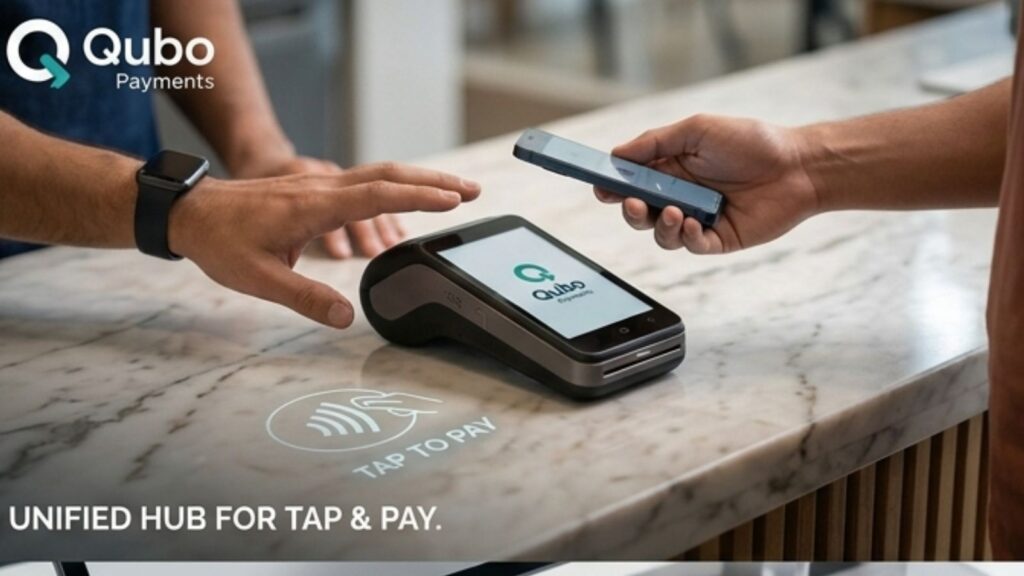
Online
Requires:
- Payment gateway
- Fraud tools
- Tokenization
- PCI compliance
In-Store
Uses:
- POS terminal
- EMV chip readers
- NFC/contactless systems
Security Features
Modern systems use:
- EMV chip technology
- Tokenization
- Encryption
- 3D Secure authentication
- Fraud detection AI
Examples:
Simple Analogy
Think of credit card processing like ordering food at a restaurant:
- Customer orders food → initiates payment
- Waiter takes order → gateway
- Kitchen coordinates cooking → processor/network
- Manager approves payment → issuing bank
- Meal delivered → authorization approved
- Customer pays bill → capture & settlement
- Restaurant receives money → merchant payout
Typical Transaction Time
| Stage | Time |
| Authorization | 1–3 seconds |
| Capture | Immediate to hours |
| Settlement | 1–3 business days |
Types of Credit Card Solutions
1. POS (Point of Sale) Solutions
Best for:
- Retail stores
- Restaurants
- Supermarkets
- Pharmacies
- Hotels
Features:
- Swipe, chip, tap, and NFC payments
- Wireless Android POS terminals
- QR and UPI acceptance
- EMI payment support
- Inventory and billing integration
- Real-time sales tracking
Banks and payment providers provide Android POS, wireless terminals, and integrated merchant solutions.
2. Online Payment Gateway Solutions
Best for:
- eCommerce stores
- SaaS companies
- Subscription businesses
- Online education
- Travel businesses
Features:
- Website checkout integration
- Multi-currency support
- Recurring billing
- Subscription payments
- API and SDK integration
- Fraud detection
- Mobile checkout
Payment gateways securely connect websites or apps with banks for transaction authorization and settlement. Platforms support 100+ payment methods and global transactions.
3. Mobile Payment Solutions
Best for:
- Delivery businesses
- Freelancers
- Field services
- Small businesses
- Taxi and transport services
Features:
- Mobile card readers
- Tap-to-pay
- Digital invoices
- Payment links
- QR code payments
- Smartphone POS systems
Mobile payment systems help businesses accept payments anywhere using smartphones or portable terminals.
4. Virtual Terminal Solutions
Best for:
- Call centers
- Remote businesses
- Consultants
- B2B services
Features:
- Manual card entry
- Phone order processing
- Email invoice payments
- Recurring billing
- Secure remote payments
These systems allow businesses to process card payments without physical card machines.
5. Omnichannel Payment Solutions
Best for:
- Large enterprises
- Retail chains
- Hybrid online-offline businesses
Features:
- Unified payment dashboard
- Online + in-store integration
- Customer analytics
- Loyalty systems
- Multi-location management
- Cross-platform reporting
Omnichannel systems help businesses manage payments across websites, mobile apps, and physical stores from one platform.
Credit Card Solutions by Business Type
| Business Type | Recommended Solution | Key Benefits |
| Retail Stores | POS Systems | Faster checkout, inventory integration |
| Restaurants | Smart POS + QR Payments | Table payments, order management |
| eCommerce | Payment Gateway | Secure online transactions |
| Startups | Cloud-based Payment Gateway | Easy setup, scalability |
| Healthcare | Contactless POS | Secure patient billing |
| Hotels | Omnichannel Payments | International card acceptance |
| Freelancers | Payment Links & Virtual Terminal | Remote client payments |
| Subscription Businesses | Recurring Billing Gateway | Automated monthly payments |
| Educational Institutions | Online Payment Portals | Fee collection automation |
| Logistics & Delivery | Mobile POS | On-the-go payment acceptance |
Important Features Businesses Should Look For
Security & Fraud Protection
A good solution should include:
- PCI DSS compliance
- Tokenization
- Encryption
- AI fraud monitoring
- Two-factor authentication
These features protect sensitive customer payment information.
Multiple Payment Options
Modern customers expect:
- Credit/debit cards
- UPI
- Wallets
- Net banking
- BNPL (Buy Now Pay Later)
- International cards
Supporting multiple payment methods improves customer experience and conversion rates.
Reporting & Analytics
Advanced systems provide:
- Sales dashboards
- Transaction reports
- Customer insights
- Settlement tracking
- Failed payment analysis
These insights help businesses optimize operations and customer experience.
Benefits of Credit Card Solutions
Credit card solutions provide advantages for both businesses and consumers by making payments faster, safer, and easier to manage.
Benefits for Businesses
1. Faster Payments
Businesses can accept payments instantly instead of waiting for:
- Bank transfers
- Checks
- Cash handling
This improves cash flow and sales efficiency.
2. Increased Sales
Customers tend to spend more when using cards versus cash.
Credit card acceptance can also:
- Reduce abandoned purchases
- Enable impulse buying
- Support online shopping
3. Global Customer Reach
Businesses can accept payments from customers worldwide through networks like:
- Visa
- Mastercard
- American Express
This is essential for ecommerce and international businesses.
4. Improved Security
Modern credit card systems use:
- Encryption
- Tokenization
- Fraud monitoring
- EMV chip technology.
5. Recurring Billing & Automation
Businesses can automate:
- Subscription payments
- Memberships
- Installment plans
- Invoicing
This reduces manual work and improves payment consistency.
6. Better Customer Experience
Credit card solutions support:
- One-click checkout
- Contactless payments
- Mobile wallets
- Buy-now-pay-later options
Examples:
- Apple Pay
- Google Pay
7. Detailed Reporting & Analytics
Most platforms provide dashboards showing:
- Revenue trends
- Failed payments
- Customer spending behavior
- Refund tracking
This helps businesses make data-driven decisions.
8. Easier Online Commerce
Credit card solutions integrate with:
- Ecommerce stores
- Mobile apps
- Booking systems
- Marketplaces
Benefits for Consumers
1. Convenience
Customers can:
- Pay instantly
- Shop online
- Use tap-to-pay
- Avoid carrying cash
2. Fraud Protection
Credit cards often include:
- Zero-liability policies
- Dispute resolution
- Chargeback rights
- Purchase protection
3. Rewards & Cashback
Many cards offer:
- Cashback
- Airline miles
- Hotel points
- Loyalty rewards
4. Credit Building
Responsible card usage can help improve a person’s credit history and borrowing ability.
5. Emergency Purchasing Power
Credit cards allow customers to make purchases even when cash is temporarily unavailable.
Benefits for Banks & Fintech Companies
Credit card solutions also help financial institutions:
- Generate transaction revenue
- Offer digital banking services
- Launch branded cards
- Gather spending insights
- Improve customer retention
Common Business Use Cases
| Industry | Example Use |
| Ecommerce | Online checkout |
| Restaurants | Contactless POS payments |
| SaaS | Subscription billing |
| Travel | Booking and deposits |
| Healthcare | Patient billing |
| Retail | In-store and mobile payments |
Potential Downsides to Consider
While beneficial, credit card solutions can involve:
- Processing fees
- Chargebacks
- Fraud risks
- Compliance requirements
- Dependence on payment providers
Businesses usually balance these costs against higher sales and convenience.
Simple Summary
A credit card solution helps businesses and consumers:
- Pay faster
- Buy more securely
- Automate transactions
- Enable online commerce
- Improve financial flexibility
It’s essentially the infrastructure that powers modern digital payments.
Future Trends in Credit Card Solutions
Credit card solutions are evolving from simple payment tools into intelligent, embedded financial ecosystems. Over the next few years, major changes in AI, digital identity, real-time payments, and embedded finance are expected to reshape how consumers and businesses use credit.
1. AI-Powered Payments & “Agentic Commerce”
Artificial intelligence is moving beyond fraud detection into autonomous financial decision-making.
Future systems may:
- Automatically choose the best payment method
- Optimize rewards and cashback
- Detect unusual spending instantly
- Negotiate financing or installment options
- Let AI assistants complete purchases on behalf of users
Companies across payments and fintech are already discussing “agentic commerce,” where AI agents can initiate and complete transactions securely.
Examples include:
- Personalized credit offers
- AI-driven fraud prevention
- Smart spending assistants
- Automated subscription management
2. Embedded Finance Will Become Invisible
Credit services are increasingly being integrated directly into:
- Ecommerce platforms
- Ride-sharing apps
- SaaS platforms
- Travel apps
- Marketplaces
Instead of applying for a separate card or loan, consumers will receive financing at the exact moment they need it.
This trend is called embedded finance.
Examples:
- Instant checkout financing
- One-click business credit
- In-app virtual cards
- Integrated expense management
The payment experience becomes almost invisible to users.
3. Buy Now, Pay Later (BNPL) Evolution
BNPL is expected to evolve into more regulated and sophisticated credit infrastructure.
Future trends include:
- Real-time affordability checks
- AI-based risk scoring
- Hybrid credit-card/BNPL products
- Flexible installment plans inside wallets
Providers such as:
- Affirm
- Klarna
are pushing BNPL beyond checkout into broader financial ecosystems.
4. Tokenization & Stronger Security
Traditional card numbers are gradually being replaced by tokens.
Tokenization:
- Hides real card data
- Reduces fraud exposure
- Improves mobile-wallet security
- Enables safer online commerce
Future systems will likely rely heavily on:
- Biometric authentication
- Device-based identity
- Behavioral fraud analysis
- Real-time AI risk scoring
Major networks like:
- Visa
- Mastercard
are heavily investing in tokenized payment infrastructure.
5. Real-Time Payments & Instant Settlement
Consumers increasingly expect payments to settle instantly.
Future credit card ecosystems may integrate:
- Real-time bank transfers
- Instant merchant payouts
- Faster cross-border settlement
- Multi-rail payment routing
Traditional batch settlement systems are gradually being replaced by always-on payment infrastructure.
6. Stablecoins & Blockchain Integration
Some payment providers are exploring blockchain-based settlement systems.
Possible future uses:
- Cross-border payments
- Merchant settlement
- Programmable payments
- Faster treasury operations
Stablecoins may become part of the “back-end rails” while remaining invisible to consumers.
This does not necessarily mean consumers will “use crypto” directly — the infrastructure may simply become faster and cheaper underneath existing card systems.
7. Virtual & Dynamic Credit Cards
Virtual cards are growing rapidly because they:
- Improve security
- Reduce fraud
- Enable temporary spending limits
- Simplify online subscriptions
Future virtual cards may:
- Regenerate automatically
- Restrict merchant categories
- Use AI-generated spending controls
8. Hyper-Personalized Credit
AI and open banking data are enabling more personalized lending models.
Instead of static credit products, future systems may offer:
- Dynamic credit limits
- Personalized interest rates
- Context-aware financing
- Real-time risk adjustments
Credit products may adapt continuously to:
- Income patterns
- Spending behavior
- Business cash flow
- Financial goals
9. Open Banking & API Ecosystems
Banks and fintechs are opening payment infrastructure through APIs.
This enables:
- Faster fintech innovation
- Banking-as-a-Service (BaaS)
- Embedded card issuing
- Connected financial ecosystems
Developers can now build financial products directly into applications without becoming banks themselves.
10. Sustainability & Ethical Credit
Consumers increasingly expect:
- Carbon tracking
- Ethical spending insights
- Sustainable rewards
- Transparent fee structures
Future cards may:
- Track environmental impact
- Reward sustainable purchases
- Provide financial wellness coaching
Emerging Technologies to Watch
| Technology | Potential Impact |
| AI agents | Autonomous purchasing |
| Embedded finance | Invisible payments |
| Tokenization | Better security |
| Stablecoins | Faster settlement |
| Open banking APIs | More innovation |
| Biometric identity | Passwordless payments |
| Real-time rails | Instant transactions |
| Smart wallets | Personalized payment routing |
Overall Direction of the Industry
The industry is moving toward payments that are:
- Faster
- Smarter
- More automated
- More personalized
- More secure
- Less visible to the user
In the future, consumers may think less about “using a credit card” and more about simply completing a task while financial infrastructure works automatically in the background.
Community discussions in fintech forums also increasingly describe payments as becoming “infrastructure” rather than standalone products.
How fintech startups build payment systems
Fintech startups usually do not build an entire payment network from scratch.
Instead, they combine banking infrastructure, card networks, APIs, compliance systems, and software into a complete payment platform.
Think of it as building layers on top of existing financial rails.
The Core Components of a Payment System
A modern fintech payment stack usually includes:
| Layer | Purpose |
| Frontend | Checkout, app, payment UI |
| Payment Gateway | Securely transmits transactions |
| Processor | Routes payments |
| Banking Partner | Holds funds/accounts |
| Card Network | Visa/Mastercard rails |
| Fraud Engine | Risk detection |
| Ledger System | Tracks balances and transactions |
| Compliance Layer | KYC/AML/regulations |